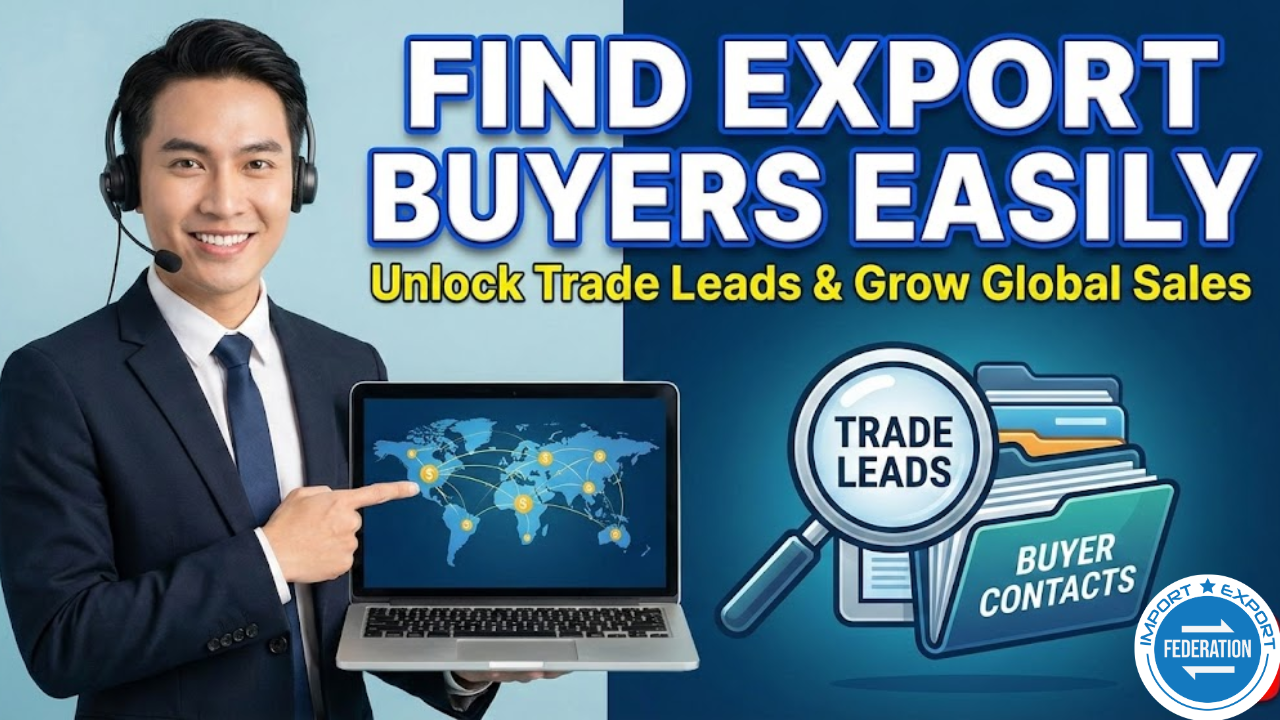
Finding genuine international buyers is one of the biggest challenges exporters face — but also the greatest opportunity. This practical, no-fluff guide walks exporters through the fastest, most reliable ways to get high-quality import–export trade leads and to build a verified export buyers list you can use to scale sales.
Why this matters
Export leads shorten your sales cycle. Instead of cold outreach, you talk to buyers who already have purchase intent — that means better response rates, faster negotiation, and higher close rates. But not every lead is worth chasing: the key is finding verified, relevant buyers and managing them well.
1. Start with the right online marketplaces
B2B marketplaces remain the most efficient way to reach international buyers quickly. List your products on platforms with global traffic and buyer tools:
-
Alibaba and Global Sources for global reach
-
IndiaMART and TradeIndia for buyers interested in South Asian suppliers
-
ExportHub, EC21, and niche vertical marketplaces for targeted leads
Quick tips: use clear photos, detailed specs, correct HS codes, and answer inquiries within 24 hours. Optimize titles and descriptions for keywords buyers actually search for.
2. Use trade-data tools and buyer directories
Trade-data providers give shipment histories, buyer import volumes, and contact patterns — invaluable for targeting buyers who already import your product category. With this data you can:
-
Spot high-frequency importers in target countries
-
Prioritize outreach to buyers with consistent purchase patterns
-
Personalise messages referencing their past imports
Trade-data reduces guesswork: you’re contacting buyers who already operate in your niche.
3. Mix online and offline: trade shows still convert
Face-to-face meetings remain powerful. At trade shows you can:
-
Demonstrate samples
-
Build personal trust quickly
-
Meet multiple buyers and distributors in one place
Choose events with relevant attendee lists and plan meetings in advance. After the show, follow up within a week with tailored proposals and sample offers.
4. Work with export-promotion bodies and industry associations
Export Promotion Councils (EPCs), chambers of commerce, and sector associations often maintain vetted buyer lists, organize buyer–seller meets, and run trade missions. These networks give you safer, higher-quality connections than anonymous leads.
5. Build a professional digital footprint
A simple, trustworthy website does wonders. Buyers check:
-
Company background and certifications
-
Product range and specifications
-
Export and packaging capabilities
Include clear contact points and a clean product catalog. Use LinkedIn to find and connect with procurement managers, importers, and distributors.
6. Outreach that converts: personalization beats volume
When contacting buyers from directories or platforms, use short, personalized messages that include:
-
One-line intro of your company
-
Product key specs, MOQ, and FOB/CIF terms
-
A line showing why you’re contacting them specifically (e.g., “I saw your recent import of X”)
Attach a one-page product sheet and offer a sample or trial order to lower their risk.
7. Vet every lead before investing time
Protect your business by verifying buyers:
-
Check company registration and website
-
Ask for references and past purchase proof
-
Use trade-data to confirm import activity
-
Start with a small, paid order or escrow if needed
Verification prevents wasted time and reduces fraud risk.
8. Organize and nurture your buyers list
Create a lightweight CRM (even a spreadsheet) to capture:
-
Buyer name, contact, country
-
Product interest and MOQ
-
Last contact date and next follow-up
Regular follow-ups, seasonal campaigns, and product updates keep your buyers engaged.
9. Combine channels for steady growth
Relying on a single source is risky. Combine:
-
B2B marketplaces
-
Trade-data outreach
-
Trade shows and EPC networks
-
LinkedIn and email outreach
-
Your own website and content marketing
A diversified approach keeps the pipeline full and reduces dependency.
Final checklist before outreach
-
Product listings optimized with keywords and HS codes
-
Professional product sheet and sample policy
-
Verified buyer contact and import history
-
Clear shipping terms, certifications, and payment options
Conclusion
Finding international buyers is repeatable when you combine data-driven targeting, credible online presence, personal outreach, and careful verification. Start with the marketplaces and trade-data that match your product, attend a relevant trade show, and build a buyers list you actively nurture. With consistency and professional processes, even small exporters can scale to reliable global sales.
FAQs (short answers)
Q: What’s the fastest way to get export leads? A: Listing on top B2B marketplaces and using trade-data to target active importers.
Q: How do I check if a buyer is real? A: Verify company registration, import records, references, and begin with a small paid trial order.
Q: Are trade fairs worth the cost? A: Yes — for many exporters the ROI is strong because of face-to-face trust and bulk opportunity.
Q: How often should I follow up with leads? A: Aim for an initial follow-up within 3–7 days, then at least monthly touches unless they ask to stop.
Q: Should I use paid lead lists? A: Paid lists can help but vet them first — quality varies. Prefer trade-data and EPC sources when possible.
 6.87 Million+ Views
  58,000+ Members
  1,171+ Reviews