India’s growing presence in global trade has opened massive opportunities for entrepreneurs, job seekers, and business professionals alike. Whether you want to start your own export-import business or upskill for a global-trade role, an Import Export Business Course can be your shortcut to mastering international trade.
This guide will show you what these courses include, how to choose the right one, the difference between online and offline training, and why Import Export Federation is one of the most trusted names in India’s import-export education space.
What is an Import & Export Business Course?
An Import Export Business Course is a structured training program designed to teach the fundamentals and advanced aspects of international trade — including product sourcing, export documentation, shipping logistics, foreign exchange, and legal compliance.
It’s ideal for:
Aspiring entrepreneurs who want to start an export-import business.
Professionals in logistics, supply-chain, or shipping sectors.
Students looking for a certification course to boost their career.
Courses can range from short-term certificate programs to in-depth diploma courses, offered in online, offline, or hybrid formats.
Why Attend an Import-Export Course in India?
India is currently one of the most promising markets for export-import ventures, with government support, strong manufacturing sectors, and expanding trade agreements.
Here’s why taking a course helps you stand out:
Understand export-import regulations, customs, and documentation.
Learn practical business models and reduce costly beginner mistakes.
Build connections with suppliers, buyers, and trade professionals.
Gain hands-on exposure to logistics, compliance, and shipping processes.
A formal course gives you both credibility and competence — two critical ingredients for success in global trade.
Online vs Offline: Which Format Should You Choose?
Online Classes (Import Export Business Course Online / Import Export Business Courses Online)
Flexibility: Study from anywhere, at your own pace — ideal for working professionals.
Interactive learning: Many top providers now offer live online sessions, mentorship, and case studies.
Example: The Import Export Federation offers a comprehensive 15-day online program that helps you start your export business even while working.
Tip: Choose a course with live interaction, Q&A sessions, and post-training business support.
Offline or Hybrid Training (Import Export Business Course Near Me)
Advantages: Direct mentorship, group discussions, port visits, and industry networking.
Ideal for: Entrepreneurs who prefer classroom settings and real-time guidance.
Hybrid Learning: Combines online theory with offline workshops — the best of both worlds.
Choosing between the two: If you’re short on time or live far from a training hub, online classes make sense. But if you want deep, practical learning with networking opportunities, offline or hybrid formats can give you more value.
Key Modules & What to Expect from a Good Course
A high-quality Import and Export Business Course should include both theoretical and practical components. Core modules typically cover:
Export-Import Policy: Understanding India’s trade framework and DGFT regulations.
Product Selection & Market Research: How to identify profitable export products.
Documentation: IEC, RCMC, commercial invoice, packing list, shipping bill, and more.
Shipping & Logistics: Understanding ports, freight forwarding, and customs clearance.
International Payments: Letter of Credit (L/C), risk management, and forex procedures.
Compliance: GST, FEMA, and global trade laws.
Practical Business Setup: From getting your first buyer to executing your first shipment.
Digital Tools: Using online platforms, B2B portals, and AI-driven trade solutions.
How to Choose the Best Course for You
Not all import-export courses are created equal. Here’s how to make a smart choice:
Define Your Goal: Are you learning for business, job, or skill enhancement?
Trainer Quality: Pick a course taught by real exporters, not just academicians.
Curriculum Relevance: Ensure it includes current trade laws, digital tools, and market trends.
Certification Value: Check if it’s recognized and provides real business utility.
Mentorship & Support: Good institutes offer post-training guidance and community access.
Batch Flexibility: Choose timing and duration that fit your schedule.
Practical Outcomes: The best courses help you start your export journey, not just pass exams.
Why Consider the Course from Import Export Federation
If you’re serious about starting your own export business, the Import Export Federation stands out for several reasons:
Practical Learning: Trainers are real-world exporters and trade experts.
Online & Offline Options: Choose between flexible online sessions or in-person classes.
Action-Driven Curriculum: Focused on helping you start your export business, not just study theory.
Business Mentorship: Includes one-to-one guidance, business setup assistance, and access to a 60,000+ exporter community.
Proven Results: Thousands of learners have successfully launched export ventures after completing their programs.
📈 Ready to Begin? Visit ImportExportFederation.com to explore their online and offline programs, upcoming batches, and registration options.
FAQs (Voice Search Optimized)
1. How long is an import export business course in India? Typically, courses run from 15 days for fast-track programs to 6 months for in-depth diplomas.
2. Can I do an import export business course online? Absolutely. Many institutes, including Import Export Federation, offer interactive online courses designed for working professionals.
3. Is import export certification worth it? Yes, especially if it offers mentorship, hands-on tools, and business launch guidance. Certifications add credibility when dealing with suppliers and buyers.
4. Which course is best for import export business in India? The best course combines practical mentorship, updated curriculum, and post-training support — qualities that define the Import Export Federation’s programs.
5. Is there an import export business course near me? Yes. Major cities like Pune, Mumbai, Delhi, and Bangalore have offline training centres. If none are nearby, choose an online course with live mentorship.
Conclusion
If you’re aiming to break into international trade or grow your business globally, enrolling in an Import Export Business Course is a smart and strategic move.
With the right course, you’ll gain:
Deep understanding of trade compliance and operations.
Practical exposure to real-world export documentation and buyer acquisition.
Step-by-step support to start your business confidently.
And for Indian entrepreneurs who want both convenience and expert guidance, Import Export Federation provides one of the most effective, practical, and affordable ways to get started.
Discover how to start and grow a profitable import export business in India in 2025. Learn about licenses, capital requirements, best products, and success tips for global trade.
Understanding the Import Export Business Landscape in India
India has always been a trade-driven nation — from the ancient Silk Route to today’s booming e-commerce exports. With a GDP heavily influenced by foreign trade, the import export business in India offers incredible potential for entrepreneurs.
In recent years, India has diversified its trade partnerships across Asia, Africa, and Europe, creating massive opportunities for small and medium businesses. The government’s Make in India and Atmanirbhar Bharat initiatives have also strengthened the export ecosystem by supporting startups and manufacturers with incentives and simplified policies.
Why Start an Import Export Business in India?
Starting an import export business in India isn’t just about trading goods — it’s about connecting India to the world. Here’s why it’s a fantastic opportunity:
Rising Global Demand: Indian textiles, spices, IT services, and pharmaceuticals are in huge demand abroad.
Low Startup Costs: With digital marketplaces and drop-shipping options, entry barriers are lower than ever.
Scalability: Once your first shipment is successful, you can easily scale to international markets.
Government Support: Programs like DGFT export incentives make exporting more profitable.
Is Import Export Business Profitable in India?
Absolutely — if done right! The profitability of your import export business in India depends on:
Choosing the right product: Exporting niche, high-demand products (like organic foods, handicrafts, or tech accessories) often leads to higher margins.
Efficient logistics: Partnering with reliable shipping companies and freight forwarders reduces losses.
The Booming Opportunity in India’s Import Export Market
India’s import-export sector is one of the fastest-growing business opportunities today. With global demand for Indian products like textiles, spices, engineering goods, and IT services, entrepreneurs are increasingly exploring international trade.
However, before jumping in, most beginners ask the same question — how much investment is needed to start an import export business in India?
The good news: you can start small, with an initial investment of around ₹5–₹10 lakhs, and scale up as your business grows. Let’s break down every cost and step you need to understand before you begin.
Why Choose India for Starting an Import Export Business
1. Expanding Global Trade Opportunities
India’s reputation for quality, affordability, and innovation continues to strengthen. Countries across Asia, Europe, and Africa are increasing imports of Indian goods — making it the perfect time for new exporters to enter the market.
2. Government Incentives and Export Promotion Schemes
The Indian government supports exporters through initiatives such as:
RoDTEP (Remission of Duties and Taxes on Exported Products)
EPCG Scheme (Export Promotion Capital Goods)
Districts as Export Hubs program
These programs help reduce export duties and make global expansion more profitable.
3. Strategic Location and Infrastructure
With world-class ports, airports, and digital trade systems, India’s logistics network allows even small businesses to reach global markets efficiently.
Types of Import Export Businesses You Can Start
Business Model
Description
Investment Range (₹)
Export Trading Company
Buy Indian goods and sell internationally.
5–10 lakhs
Import Trading Company
Import goods and sell domestically.
10–20 lakhs
Manufacturer-Exporter
Produce goods yourself and export them.
20–50 lakhs
Each model has its own capital needs, but all can become profitable with strategic planning and low overhead operations.
Legal Requirements and Registrations
Before investing, ensure your business is legally registered and compliant.
1. Import Export Code (IEC)
You must obtain an IEC from the Directorate General of Foreign Trade (DGFT). 📋 Cost: ₹500 – ₹2,000 only.
2. GST Registration
Register your business for GST to handle domestic transactions efficiently.
3. Business Structure
Choose the right structure — sole proprietorship, partnership, LLP, or private limited — based on your goals and funding.
4. RCMC (Registration Cum Membership Certificate)
Issued by export promotion councils for specific industries such as textiles, food, or electronics.
How Much Investment Is Needed to Start an Import Export Business in India
Here’s a clear breakdown of the major costs involved:
Category
Approximate Cost (₹)
IEC & Legal Registration
5,000 – 10,000
Office Setup
1,00,000 – 3,00,000
Website & Branding
50,000 – 1,00,000
Logistics & Freight
2,00,000 – 5,00,000
Working Capital
2,00,000 – 5,00,000
Miscellaneous
50,000 – 1,00,000
✅ Total Investment: ₹5 – ₹15 lakhs (on average)
This cost can be reduced further by starting from home or using digital B2B platforms like Alibaba, Indiamart, or TradeIndia.
Import Export Business Setup Costs Explained
1. Office Setup
You can work from home initially or rent a small co-working space. All you need is a laptop, internet connection, and basic furniture.
2. Marketing & Branding
Build a strong online presence — create a professional website, list your products on B2B marketplaces, and use SEO to attract international buyers.
3. Logistics & Shipping
Tie up with trusted freight forwarders to manage shipping, customs clearance, and documentation efficiently.
Funding Options for Import Export Business
Starting capital doesn’t have to come entirely from your pocket. You can explore:
Self-funding (Bootstrapping) – Ideal for small traders.
Bank Loans & MSME Schemes – Many banks offer export finance at low-interest rates.
Government Support – Explore subsidies from organizations like EXIM Bank and Export Credit Guarantee Corporation (ECGC).
Profit Margins and ROI
Profit margins vary by product type:
Handicrafts & Textiles: 15–30%
Agro Products: 10–25%
Engineering Goods: 20–40%
Most exporters achieve a break-even point within 6–12 months when they manage cash flow and shipments efficiently.
Challenges Faced by New Exporters
While the business is profitable, beginners may face:
Complicated documentation
Currency fluctuation risks
Finding reliable international buyers
However, with the right guidance and education, these challenges are easy to overcome.
🌏 Free Masterclass: Learn How to Start an Import Export Business in India
If you’re serious about starting your own import export business but feel overwhelmed by the paperwork, investments, or product selection — here’s the perfect starting point!
In this exclusive session, you’ll learn: ✅ The exact process to register and launch your export business ✅ How to identify profitable export products ✅ How much investment is really needed to start ✅ Real-life case studies from successful exporters in India
Thousands of participants have already benefited — and now it’s your turn to start your global trade journey with expert guidance.
Step-by-Step Process to Start an Import Export Business in India
Conduct Market Research – Identify high-demand products internationally.
Register Your Business and Get an IEC – Apply online via DGFT.
Find Buyers and Suppliers – Use B2B marketplaces or attend trade fairs.
Choose a Reliable Freight Partner – Simplify shipping and documentation.
Promote Your Business – Build credibility with a professional website and certifications.
Best Practices to Reduce Startup Costs
Use shared warehouses instead of owning one.
Start digitally before renting physical offices.
Partner with logistics companies that offer credit or pay-later options.
Leverage government training programs like DGFT’s Niryat Bandhu Scheme.
Case Study: Indian Export Success Story
Rohit Kumar, a Pune-based entrepreneur, started exporting organic spices with just ₹6 lakhs in 2020. Within three years, his company began shipping to over 10 countries — earning over ₹1 crore in revenue by focusing on niche markets and leveraging online trade portals.
FAQs About How Much Investment Is Needed to Start an Import Export Business in India
1. What is the minimum investment required to start an export business? You can begin with ₹5–₹10 lakhs, including registration, website, and logistics.
2. Is it possible to start an import export business from home? Yes, with digital platforms and courier-based shipments, home-based exporters are thriving.
3. How long does it take to get an IEC code? It usually takes 2–3 working days through the DGFT portal.
4. Do I need prior experience to start? No — proper training and mentorship (like the Free Masterclass mentioned above) are enough to get started.
5. What are the most profitable export products from India? Textiles, organic foods, handicrafts, and leather goods are among the most profitable.
6. Can I get government loans for my export business? Yes, you can apply for credit under MSME Export Finance Schemes and EXIM Bank initiatives.
Conclusion: Is the Import Export Business Profitable in India in 2025?
Absolutely! With minimal investment, smart digital marketing, and access to global markets, the import-export industry offers endless potential. India’s strong trade network, government support, and growing product demand make it one of the most promising ventures for new entrepreneurs.
Start your journey today — learn, plan, and trade smartly. And don’t forget to join the Free Masterclass by Import Export Federation to turn your dream of global entrepreneurship into reality.
Introduction: Why Finding Buyers Is the Hardest Step in Export Business
Starting an import export business can be exciting—but one of the biggest challenges entrepreneurs face is finding reliable buyers. You may have high-quality products and competitive prices, but without the right buyers, your business can’t grow. The global trade market is huge, but knowing where and how to look makes all the difference. In this guide, we’ll break down effective strategies to find import export buyers, build trust, and establish lasting business relationships.
Understanding Your Target Market Before Searching for Buyers
Identify Your Ideal Buyer Persona
Before reaching out to anyone, identify who your perfect buyer is. Are they wholesalers, retailers, distributors, or e-commerce sellers? Knowing this helps you tailor your marketing message and approach the right audience.
Study Market Trends and Product Demand
Use tools like Google Trends, Statista, or trade data portals to discover where your products are in demand. For example, if you export organic spices, check which countries have growing demand for natural ingredients. Understanding product trends will help you target markets that actually need your product.
Best Ways to Find Buyers for Your Import Export Business
1. Use B2B Marketplaces
Online B2B platforms are among the fastest ways to find international buyers. Top websites include:
Alibaba – Best for connecting with wholesalers and distributors.
Global Sources – Great for electronics and manufactured goods.
TradeIndia and IndiaMART – Ideal for South Asian markets.
ExportHub and EC21 – Popular for small to medium exporters.
Create a professional profile, upload clear product photos, and use relevant keywords so buyers can find you easily.
2. Attend International Trade Fairs and Exhibitions
Trade fairs offer face-to-face networking with serious importers and distributors. Events like Canton Fair (China), Dubai Expo, and SIAL (Paris) connect exporters with thousands of global buyers. Prepare brochures, samples, and a short presentation about your company to make a strong impression.
3. Register on Export Promotion Platforms and Directories
Governments and export councils often maintain buyer databases. For example:
Export Promotion Councils (EPCs) in each country
Trade.gov (U.S.)
DGFT India Buyer-Seller Meet
These resources help you reach verified buyers and participate in government-backed trade missions.
4. Use LinkedIn and Social Media for Lead Generation
LinkedIn is one of the most underused tools for exporters. You can:
Join international trade groups
Connect directly with importers
Post about your products regularly
When done right, LinkedIn helps build credibility and organic connections. Similarly, Facebook and Instagram can attract small business buyers who prefer informal communication.
5. Partner with Export Agencies and Chambers of Commerce
Organizations like the Import Export Federation provide mentorship, verified buyer contacts, and training resources. They help new exporters learn documentation, compliance, and buyer negotiation skills — crucial for building long-term trade success. 👉 Learn more at Import Export Federation
How to Approach and Build Trust with Buyers
Crafting a Professional Company Profile
Buyers judge you based on your first impression. Create a professional company profile with product photos, certifications, and clear contact details. It builds credibility instantly.
Writing Effective Buyer Outreach Emails
Your email should be short, clear, and professional. Include:
Product details and benefits
Pricing or MOQ (Minimum Order Quantity)
Certifications and export capabilities
Company introduction with website or catalog link
Personalize your message instead of using generic templates.
Offering Samples and Competitive Quotes
Once a buyer shows interest, offer free or discounted samples. It demonstrates confidence in your product quality and increases trust. Ensure your pricing is competitive, especially for initial orders.
Common Mistakes to Avoid When Searching for Buyers
Relying on a single marketplace or lead source
Ignoring follow-up communication
Overpromising and underdelivering
Not verifying buyer legitimacy
Neglecting after-sales support
Building export relationships takes time. Always verify buyers through trade references or export databases before confirming any deal.
Free and Paid Resources to Learn More About Buyer Sourcing
Import Export Federation – Learn Global Trade the Smart Way
If you’re new to exports and struggling to find genuine buyers, the Import Export Federation offers expert-led training, business guidance, and verified buyer lists. Their courses are perfect for beginners who want to build confidence and expand globally without guesswork.
FAQs About Finding Buyers for Import Export Business
1. How do I find genuine buyers online? Use verified B2B sites like Alibaba, register on export councils, and always cross-check contact information before finalizing any deal.
2. What’s the easiest way to get first export order? Start with niche marketplaces or local export agents who already have buyer connections.
3. Can social media really help find buyers? Yes! Many small importers use Facebook, LinkedIn, and Instagram to source suppliers directly.
4. Should I invest in paid buyer databases? Only if they come from reputable sources like trade councils or recognized export organizations.
5. What if a buyer stops replying? Follow up professionally after a few days. If still unresponsive, move on — consistency is key in exports.
6. Is it necessary to take export training? Absolutely. Export training helps you avoid costly mistakes, understand documentation, and connect with trusted buyers faster.
Conclusion: Turning Leads into Long-Term Partnerships
Finding buyers for your import export business takes patience, persistence, and strategy. Use multiple platforms, network effectively, and maintain professional communication. With time, you’ll convert inquiries into repeat orders — and your global business will thrive.
For deeper learning, mentorship, and real buyer connections, visit the Import Export Federation and start your journey toward global trade success today. 🌍
Meta Description: Learn how to build a successful import export business between India, UAE, and global markets. Strategies, product selection, payments, risks & scaling tips.
Introduction
In a world where borders are blurred by trade and supply chains, the import export business remains one of the most potent avenues to tap international demand. Whether you’re in India seeking to export to the UAE, or exploring global commodities, the potential is vast.
In this article, you’ll gain actionable insights from real experience, distilled from a podcast conversation. You’ll learn how to turn passion into profits, navigate risks, and scale sustainably. Visit ImportExportFederation.com for more resources on trade, guides, and networking.
1. Why Import Export Business Remains Attractive
Global demand & diversification: Not restricted by local consumption.
Scalability & volume: Commodities allow scale and sustainable margins.
Arbitrage & positioning: UAE acts as a re-export hub.
Hedge against local downturns: Pivot to export markets when local demand drops.
Success depends on supply consistency, relationships, and specialization.
2. Foundations Before You Launch
a) Market Research & Homework
Which product(s)?
What price, quality, and margin expectations?
Who are your competitors?
What logistics, duties, and compliance will apply?
b) Pick One Product & Master It
“Focus on one thing. Master it.” Start with one commodity and optimize before diversifying.
c) Build Trust & Relationships
Quality, on-time delivery, and price integrity are essential. Build relationships early.
3. Trade Corridor Spotlight: India ↔ UAE
The India-UAE trade corridor is rapidly expanding:
Non-oil trade rose ~34% year-on-year in H1 2025 under CEPA benefits.
India exported over 7,100 commodities to the UAE in FY25.
Major exports: engineering goods, gems, petroleum, electronics, and agro items.
The UAE acts as a re-export hub with strong logistics, free zones, and reduced tariffs.
4. Product Strategy & Commodity Insights
a) High-Volume Staple Goods
Wheat, rice, sugar, and animal feed have stable demand but tight margins.
b) Value-Added & Specialty Goods
Processed foods, snacks, and handicrafts offer higher margins but need branding and certification.
c) Seasonal & Cyclical Products
Dates, fruits, and dry fruits follow harvest cycles—align sourcing with crop cycles.
d) Sourcing & Blending
Import from multiple origins (India, Turkey, etc.) and blend for quality and demand balance.
5. Distribution & Buyer Channels
Plan logistics, customs, and storage effectively.
B2B: bakeries, mills, bulk processors
Distributors or wholesalers
Direct branded sales
6. Payment Terms, Risk Mitigation & Contracts
a) Payment Terms
Use advance payments, partial payments, or “bill to bill” systems.
b) Currency & Invoicing
Invoice in INR or USD; use hedging for large transactions.
c) Partner Vetting & Trust
Verify partners, visit them, and conduct reference checks.
d) Contracts & Legal Protection
Use formal agreements with penalty clauses and Incoterms. Ensure compliance clauses are clear.
7. Marketing, Lead Generation & Online Presence
Offline: field sales, trade exhibitions, B2B outreach
Online: create SEO content, guides, and buyer resources
Use multimedia and voice optimization for visibility
9. Challenges & How to Overcome Them
Price sensitivity: compete with quality and consistency.
Saturation: focus on differentiation and reliability.
Regulatory shifts: stay flexible with suppliers.
High costs: manage warehousing and logistics efficiently.
Trust & defaults: verify partners and use contracts.
10. Scaling & Measuring Success
Track volume, profit margins, and repeat orders.
Expand into new markets after mastering one product.
Invest in warehouses and logistics only with solid margins.
Choose between branding or staying a B2B trader.
11. Learnings & Anecdotes from the Podcast
Focus and consistency matter most. Build trust gradually, avoid over-diversification, and scale sustainably.
12. FAQs
Q1. What is import export business? Buy goods from one country and sell in another after obtaining trade licenses and compliance.
Q2. Which products to export from India to UAE? Dry fruits, spices, processed food, gems, and engineering goods.
Q3. How to find reliable buyers? Visit them, check references, and begin with trial orders.
Q4. What payment terms are common? Advance payments, partial payments, or bill-to-bill arrangements.
Q5. How to optimize for voice search? Use question-based headings, schema markup, and concise answers.
Since Govt of India as cut Onion Export Duty by 20% effective from 1st April 2025, and if you are an exporter, trader, supplier or farmer and don’t have the capital, experience, or risk appetite to enter a price-sensitive market immediately, here’s what you should do instead of rushing into exports of Onion:
If you are looking for licenses or documentation help from Import Export Federation, please click here and connect with our team.
1. Become a Sourcing Specialist Before Exporting during and after Onion Export Duty changes
Instead of immediately exporting, connect with Indian onion suppliers and growers.
Build a network of reliable farmers and traders who can supply at competitive prices.
Many big buyers in Gulf & Asia need trusted sourcing partners instead of direct exporters.
2. Offer Trade Support Services
If you’re not exporting yet, start by offering these services to established exporters & buyers:
Sourcing & Procurement – Find, verify, and inspect suppliers for buyers.
Logistics & Shipping Coordination – Help with container bookings, freight negotiations, and custom clearance.
Market Research & Pricing Analysis – Track onion prices across multiple ports & markets (Al Aweer, Chittagong, Jeddah, etc.).
Quality Inspection & Grading – Act as a quality assurance partner for buyers who don’t trust new suppliers.
Documentation Assistance – Help in export documentation, certification, and compliance to smoothen trade.
💡 Why This Works when Onion Export Duty changes are made by Govt?
No financial risk but you still get hands-on trade experience.
You build relationships with importers, commission agents, and logistics partners.
You become a trusted player in the supply chain—later making it easier to transition into direct exporting.
3. Secure Smaller, Controlled Deals First
Instead of trying to export large volumes to Al Aweer or Bangladesh (where price drops are brutal), start with niche, premium markets like:
Maldives (resorts & high-end buyers)
Europe (buyers who prefer better packaging & certification)
High-end food processors & restaurants (who need a steady quality supply)
Export small, trial shipments first → learn how pricing, logistics, and payment terms work.
4. Stay Away from Volume Wars & Focus on Value Addition
Usually exporters and suppliers wake up when Govt. changes Onion Export Duty however, it is advisable not to compete with big exporters on volume—you will lose. Instead, differentiate by offering:
Premium sorted & graded onions (higher margin than bulk shipments).
Branded packaging with QR codes for traceability.
Onions with extended shelf life using better storage techniques.
💡 Example: Instead of selling raw onions at a low price, supply pre-graded, pre-packed onions to specialty buyers in Singapore or Hong Kong supermarkets.
5. Build Direct Buyer Relationships, Skip Commission Agents
Instead of relying on Al Aweer’s commission system, where prices fluctuate daily, focus on direct contracts with supermarkets, wholesalers & food processors in:
UAE & Oman (Retail supply chains like Carrefour, Lulu, Nesto)
Russia & Eastern Europe (Premium onion demand, less competition)
Singapore & Malaysia (High-end food service industry)
Use LinkedIn, B2B marketplaces (like Alibaba, TradeIndia, Export Genius) to find direct buyers.
Expanding your export business Further …
Expanding your export business further to high-margin markets requires strategic targeting of countries and buyers who value the quality of Indian red onions. Here’s a tailored approach:
1. Identify High-Potential Markets
The global import trends data suggests that focusing on following will be more beneficial:
To establish direct relationships and avoid intermediaries, consider the following strategies:
United States: Platforms like Volza provide directories of active buyers. For instance, GOURMET USA has been identified as a significant importer of Indian red onions. Volza Data Source
United Kingdom, Germany, Netherlands: Connect with importers and distributors who are specialized in fresh produce by attending international good trade fairs and also utilize the trade databases.
Malaysia: Local chambers of commerce and trade associations engagement is crucial to identify potential buyers and understand market requirements.
3. Understand Market Entry Requirements
Each country has specific standards and regulations:
European Union: Compliance with EU quality standards, certifications, and phytosanitary requirements is crucial. Detailed guidelines are available through resources like the Centre for the Promotion of Imports (CBI). cbi.eu Get detailed guidelines are available through resources like the Centre for the Promotion of Imports (CBI ) for compliance with EU quality standards, certifications, and phytosanitary requirements. cbi.eu
United States: Ensure adherence to USDA regulations and consider obtaining certifications that highlight the quality and safety of your produce.
4. Differentiate Your Product
In competitive markets, differentiation is key:
Quality Assurance: Implement stringent quality control measures to ensure consistency.
Branding & Positioning: Developing a strong brand identity that resonates with health-conscious consumers many do not consider in the rush of making profits, but this is a critical step.
5. Leverage Trade Platforms
Utilize B2B platforms and trade directories to showcase your products:
Volza: Provides insights into profitable markets and potential buyers. Volza
Trade Fairs: Participate in international trade fairs to network and establish direct contacts.
6. Monitor Market Trends
Stay informed about global market dynamics:
Import Patterns: Regularly review import statistics to identify emerging markets.
Competitor Analysis: Competitors will always do something different to gain the advantage! So , understanding the strategies of other exporters to identify opportunities and threats.
By focusing on these strategies, you can position your business to effectively penetrate high-margin markets and establish sustainable relationships with premium buyers.
Conclusion for Exporters
New exporters should NOT rush into high-competition markets (UAE, Bangladesh, Sri Lanka).
Start by offering services like sourcing, quality inspection, and logistics support.
Secure small trial shipments & focus on premium, stable-price markets.
Long-term success comes from direct buyer relationships & market intelligence—not quick trades.
How farmer can deal with Onion Export Duty changes situations
Here is how Indian Farmers can also ensure maximum benefit out of such movements that are happening in the market.
To help Indian farmers unite under an FPC (Farmer Producer Company) and achieve better pricing stability in onion exports, here’s a 10-point expert strategy considering India’s socio-economic reality:
1. Form & Strengthen an FPC with Committed Farmers
Ensure like-minded farmers join the FPC who are willing to cooperate and follow a common business model.
Have a minimum land holding agreement (e.g., 100+ acres collectively) to ensure steady supply for exports.
2. Understand the Economics of Export-Oriented Farming
Onion farming for export must be planned cyclically, not seasonally.
If one farmer grows and sells once a year, he loses leverage. FPC should plan for continuous supply with different members harvesting at different times.
3. Storage & Post-Harvest Infrastructure is Key
A cold storage facility within the FPC ensures onions can be stored when prices fall, preventing distress sales.
Invest in sorting, grading, and packaging units to increase onion value instead of selling bulk at farmgate prices.
4. Direct Tie-Ups with Export Markets Instead of Middlemen
Avoid commission agents in UAE, Bangladesh, and Sri Lanka, who manipulate prices.
Register the FPC on international B2B platforms like Volza, TradeIndia, AgriBazaar, and Global GAP-certified buyer networks.
Attend Gulfood, SIAL, and other international trade fairs to find long-term buyers.
5. Bulk Contract Farming with Exporters & Processors
Instead of waiting for random export orders, negotiate fixed-price contracts before the season starts.
Tie up with dehydration factories & processing plants that buy onions regularly for powders & processed food.
6. Price Hedging & Govt Support Utilization
Use market intelligence platforms to track global onion price trends and time sales better.
Farmers should demand MSP (Minimum Support Price) guarantees from the state government to ensure buffer pricing.
Utilize subsidies & funds under NABARD, APEDA, and SFAC schemes to strengthen FPC capital.
7. Invest in Branding & Value Addition
Instead of selling just “red onions,” position the product as a premium variety with clear quality standards.
Create an FPC brand with a logo, GI tagging, and a unique name (e.g., Maharashtra Prime Onions).
Buyers trust branded FPCs over individual farmers due to consistent supply & quality control.
8. Negotiate Collective Input Purchases for Cost Reduction
Buy fertilizers, seeds, and pesticides in bulk through the FPC to lower input costs by 10-15%.
Collaborate with agricultural research institutions for better-yielding varieties.
9. Set Up an Internal FPC Price Regulation System
Avoid undercutting each other in pricing—create a minimum selling price for all members.
Implement a revenue-sharing model where FPC sells in bulk and distributes profits fairly.
10. Train Farmers on Export Compliance & Certifications
Get Global GAP, APEDA, and HACCP certifications to access premium buyers in Europe, the Middle East, and Southeast Asia.
Provide basic training on quality, logistics, and export documentation to ensure smooth trading & avoid losses.
Conclusion: Maximum Profits through Collaboration, Not Competition
An individual farmer cannot succeed alone in exports—FPC ensures better bargaining power & stable pricing.
Eliminate middlemen, use market intelligence, and focus on branding & contract farming for sustainable profits.
Leverage Govt subsidies, modern storage, and bulk purchasing to reduce costs & improve margins.
Would you like a detailed roadmap for FPC formation & export execution? 🚜📈
The global demand for sustainable agricultural solutions has fueled the rapid growth of cocopeat exports from India especially, USA, South Korea and China have been the biggest importers!
With an industry valued at ₹4000 crore (as per Govt Website data), India is a leading supplier of high-quality cocopeat, a versatile and ecofriendly growing mechanism that is revolutionizing the substrate industry.
If you’re interested in starting a cocopeat export business, this guide and the video (Only avail for YouTube channel members only as of now, ), provides a deep dive into the industry, from what cocopeat is to how to export it successfully, including insights from Sai Substraits, a major player in the field.
Cocopeat, also known as coir pith (typically used in agriculture and horticulture industry), as you know, is a byproduct of coconut fiber extraction and it is
It consists of:
Coconut Husk Fiber
Coir Dust
Pith
Why is Cocopeat in Demand?
💪 Sustainability – A renewable alternative to peat moss
🌿 Superior Water Retention – Holds 8-10 times its weight in water
💚 Eco-Friendly – 100% organic and biodegradable
🌟 pH Balanced – Ideal for hydroponics and soil conditioning
🌿 Nutrient-Rich – Promotes healthy plant growth
🌟 Sai Substraits: A Legacy of Cocopeat Excellence
One of India’s most reputed cocopeat exporters, Sai Substraits, has a long-standing history in the industry:
90+ years of legacy in the coconut industry
Exports to 45+ countries since 2005
Grandfather was on the Coconut Development Board of Andhra Pradesh
Offices in India & Spain, serving EU, China, and North America
Specializes in custom-made cocopeat solutions
Less presence in the Gulf market due to demand for low EC cocopeat
🌐 How Does Cocopeat Export Work?
Cocopeat is primarily exported in 5kg blocks (as a commodity), and usually transported in 40ft high-cube containers. (However, it may vary based on buyers requirements and the order size)
Container Capacity:
With pallets: 23MT per container
Without pallets: 26MT per container
Pricing Structure:
FOB Price: $470 per 5kg block
Ex-Factory Price: ₹33/kg + 5% GST
Profit Margins: $10-20 per MT when dealing with direct distributors
🌍 India vs. Global Competitors
India is one of the largest producers of high-quality cocopeat, but it faces competition from Brazil, which primarily supplies South & North America.
Market Trends:
Current container price: $8,000 (due to high demand and seasonal rainfall effects)
Prices expected to drop post-rainfall season
India’s edge: Superior quality and vast production capabilities
🌿 Cocopeat Uses: What Can You Grow?
Cocopeat is widely used for growing various crops, including:
🍅 Tomatoes – China, India, U.S.
🌶️ Peppers – China, Mexico, Turkey
🍓 Strawberries – U.S., Mexico, Spain
🥒 Cucumbers – China, Iran, Turkey
🌱 Lettuce – U.S., Spain, China
🍉 Melons – China, Turkey, Iran
🥕 Carrots – China, Uzbekistan, U.S.
🍽️ Bell Peppers – China, Mexico, Indonesia
🍌 Bananas – India, Ecuador, Philippines
🌐 How to Develop a Marketing Strategy for Your Cocopeat Business
Marketing is crucial for a successful cocopeat export business.
Marketing Strategy:
🌎 Attends 10+ global exhibitions per year
🔍 Strong SEO & digital marketing presence
📈 Strategic ad spend for lead generation
👨🦰 Identify Agronomists / consultants as a power connect
📞 Want help with marketing? Call +91 9637770010
🛍️ Types of Cocopeat Packaging
Cocopeat is available in various packaging formats to meet customer needs:
5kg Blocks – Standard export format
Grow Bags – Used in hydroponic farming
Loose Cocopeat in Bales – Ideal for large-scale agricultural use
Retail Packs (650g Bricks) – For home gardeners & small farms
Starting a cocopeat export business requires industry knowledge, reliable suppliers, and strategic marketing. Our team at Import Export Federation provides:
📅 Training & consulting for new exporters
🌐 Market research & buyer connections
💼 Step-by-step guidance on documentation & logistics
📞 Contact us now: +91 9637770010
🎉 Conclusion
India’s cocopeat export industry is booming, with huge global demand and high-profit margins. If you’re looking to tap into this growing sector, now is the perfect time to start!
🔔 Subscribe to Import Export Federation for industry secrets!
A strong foundation has been laid down between the two nations after India’s Prime Minister Narendra Modi’s official visit to Russia with President Vladimir Putin to promote bilateral trade and economic relations with a trade roadmap aimed to achieve a 100-billion-dollar (Rs. 8.34 lakh crore) target in annual trade volume by 2030. This is one of the greatest import and export opportunities that every import export businessman should consider for expanding business.
The Goal is to improve
Import Export Trade Structure
Trade Procedures/Processes
Emphasising transactions in Indian Rupees (INR)
Offering Duty benefits, and
Enhancing logistics support
Focus on “Make in India” products
Why does India want India-Russia Trade Volume, Growth and Balance to go to next level?
India- Russia Trade reached a record USD 65 billion in 2023.
A significant trade growth of 66% in the previous year and an additional 20% trade growth in the first quarter of 2024.
India faced a trade deficit of $57 billion with Russia in 2023-2024 period.
Hence India is aggressively looking forward to increase Export to Russia.
Major Decisions and Initiatives
Removing Trade Barriers: Both India and Russia aim at removing barriers to facilitate smoother trade.
Local Currency Exchange: Introduction of a system for transactions using Indian Rupees (INR), to reduce dependency on the US dollar and manage exchange rate risks.
Simple Customs Procedures: To speed up the process and movement of good trade between India and Russia by simplifying custom procedures.
Improved Connectivity Routes: Developing new maritime and land transport routes such as:
Chennai-Vladivostok maritime route
Northern Sea Route, and
International North–South Transport Corridor via Iran Image Sources – Internet
Investments in Energy and Infrastructure: Focus on increasing investments in the energy sector and infrastructure development to support trade growth.
Diplomatic Expansions: To strengthen diplomatic relations between India and Russia opening two new consulates in:
Kazan and
Yekaterinburg
Memoranda of Understanding (MoUs): Signing of 22 MoUs across various sectors including:
MoU on Climate Change,
MoU on Legal Arbitration, and
MoU on Pharmaceutical Certification.
Business Engagement and Relations: Organising B2B meetings, business promotion events, and exchange of business delegations to improve commercial relationships.
Trade Dynamics Import and Export opportunities
1. Trade in INR: A Game Changer
A key feature of this trade roadmap is trading in Indian Rupees [INR] to reduce dependency on the US dollar, lowering transaction costs and risk of exchange fluctuations. For Indian exporters to grow their businesses by providing a stable revenue line, creating a favorable environment for business expansion. Takeaway : Learn offering the Price with Incoterms (CIF or FOB) to be prepared in INR instead of $ (USD)
2. Duty Benefits: Making Trade Easier Both India and Russia have agreed to offer duty benefits on different types of goods to promote trade. These exemptions and reductions on import duties will provide Indian products a more competitive edge in the Russian market, encouraging exporters to explore and expand their offerings. Takeaway: Keep an eye on exemptions/benefits Govt will announce. Import Export Federation will duly announce it as soon as it is declared!
3. Logistics Support: Smooth Functioning of Supply Chains Effectiveness
Improved logistics support is a focus of this roadmap. By improving transportation and infrastructure links, the time and cost associated will be significantly reduced with shipping goods between India and Russia. The efficiency of logistics is expected to enhance the overall competitiveness of Indian exports.
Takeaway: Study 3 different trade roots mentioned above and identify based on your location in India how logistic costs can be improved to get more profit.
What products to focus now on for Indian Exporters?
With a strong connection to a prominent supermarket chain in Russia, the Import Export Federation is in a prime position to leverage these opportunities. Here are some promising products to consider to make out of all the Import and Export opportunities:
Agricultural Products: Coffee, tea, mate and spices.
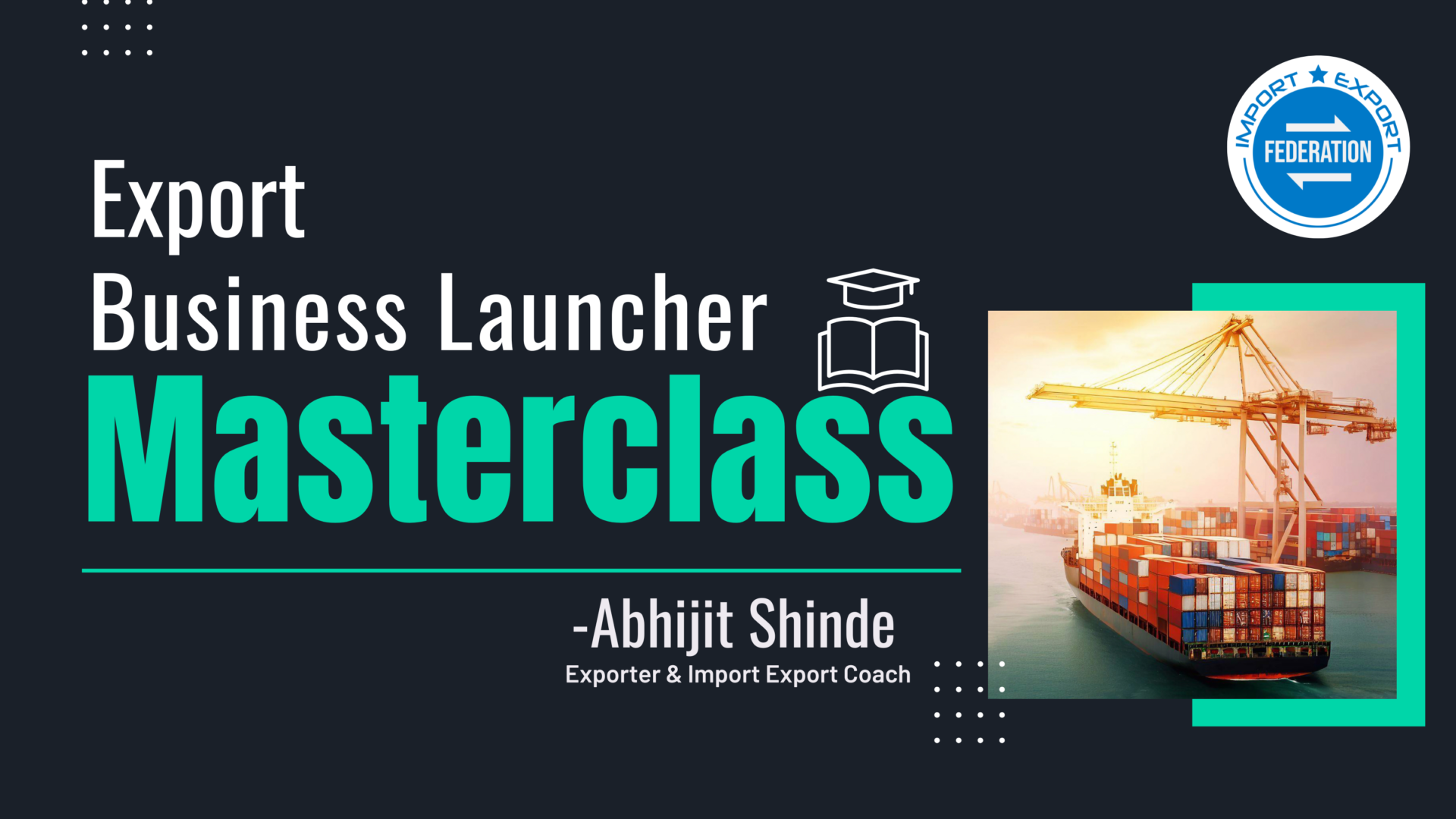
The Import-Export Federation recognizes the immense potential in this strengthened trade roadmap. Our Federation, with strong ties to a leading supermarket chain in Russia, is perfectly positioned to capitalise on all the Import and Export opportunities. We are always eager to hear about the products a new exporter wishes to export to Russia in our Export Business Launcher Masterclass.
For those committed to mastering the entire export cycle to completing the billion dollar opportunity export shipment we have a flexible in-depth online export course and guaranteed support for your first shipment all the Import and Export opportunities.
If you don’t know where to start, this is where we have covered all the fundamentals of how to start import export business in detail!
India’s import-export industry, rooted in centuries-old trade routes, is now a major global player. Diverse products, including textiles, pharmaceuticals, and automotive components, contribute to a robust export portfolio.
Crude oil, machinery, and electronics are among the country’s notable imports. Key trade partners span the globe, fostering economic ties worldwide.
Government bodies like DGFT and the Ministry of Commerce regulate policies to promote exports and ensure compliance. Despite challenges like regulatory complexities and logistical hurdles, the industry drives significant economic growth and job creation. Positioned for further expansion, India’s import-export sector remains vital for global trade dynamics and economic prosperity.
India comes in the top 10 exporter countries of the world and these numbers are rising every year. India ranks 9th when it comes to import numbers.
II. Importance of understanding how to start an import-export business in India.
Starting an import-export business in India holds immense significance due to its potential for global market access, diversified revenue streams, and contribution to economic growth.
It offers entrepreneurs, business owners and traders opportunities to tap into international markets, capitalize on India’s rich resources and skilled workforce, and foster innovation and competitiveness. Import-export businesses drive job creation, foreign exchange earnings, and technological advancements, propelling India’s position as a key player in the global economy.
Moreover, they facilitate cultural exchange, diplomatic relations, and mutual prosperity, reinforcing India’s role as a vibrant hub for international trade and commerce.
III. Why Choose Import Export Business over others?
There is a general perception that the Import Export business is very complicated and has many dependencies to be profitable. But in reality, every business is not as simple as it seems in the first place. Before starting any business, it is necessary to know the basics about it and have someone who can answer your questions.
To make your business successful you will definitely need a hand-holding support of an experienced or seasoned businessman or a community along with your knowledge.
There are many known and unknown factors that are to be considered to tackle in real time. e.g. understanding the government’s policy, market’s demand and supply numbers, current trade practices, opportunities, business setup cost, marketing efforts required, working capital, target markets, products, profit, risk and Return of Investment etc.
In the Import Export business also, it is important to understand the right opportunities at the right time! The whole world is looking forward to India as a global supplier in merchandise as well as service sectors. The Indian government also has set an export target of USD 1 Trillion and is very confident about achieving it in the next 3 years.
Considering China’s strategy to expand into work marketing and considering geo-political strategies that have been adopted by China, the world is not willing for Chinese Products. e.g. The USA has imposed 25% import duty on Chinese products with the intention to reduce Chinese import.
2. Diverse Product Range:
India exported a whopping 10808+ products last year as per a government report. It means India has a huge potential to sell its products from all sectors worldwide like China.
Statistically, the World’s Total Population of 750 Cr, more than 60% i.e 400 Cr is around us.
We are trading more with neighboring countries. So we at Federation suggest to new exporters to start with Asian markets which are relatively easily accessible from a cultural and cost point of view.
3. Profit Potential:
Understanding demand-supply of a product / products, finding a genuine buyer, covering the risks are very important. Export businesses offer lucrative profit potential by tapping into global markets, allowing for higher profit margins due to increased demand and favorable pricing dynamics.
With the ability to access diverse consumer bases and capitalize on competitive advantages, export ventures can yield substantial returns on investment and drive sustainable growth.
IV. Indian Government Policies to start import export business
The Indian Directorate General of Foreign Trade (DGFT) is a regulatory body under the Ministry of Commerce and Industry responsible for formulating and implementing foreign trade policies. It manages licensing and regulation of imports and exports, facilitates trade promotion initiatives, and ensures compliance with international trade regulations.
The Ministry of Commerce and Industry oversees India’s trade and commerce activities, formulates policies to promote economic growth, and fosters industrial development, including export promotion and trade facilitation efforts coordinated with DGFT.
There’s a growing global interest in Indian products, partly due to their quality, cost and uniqueness. This creates a favorable market for new and established Indian brands.
India’s “Make in India” has been a very successful strategy for India. One example is the mobile Smartphone industry, India which was one of the largest importers of mobile phones has become one of the largest exporter of mobile Smartphone in the world. So the Indian Government knows our strength and what we can achieve as a nation. Now the Indian Government is advising “Make for the World”, whoever you are, farmer, student, trader, manufacturer, service provider, artist, educator, you must develop a product or service which is world class and sell it to the whole world.
India’s Trade Deficit is $267+ Billion and it is rising. Country is spending its foreign reserve on imports which it could have used for infrastructure development. Hence the government of India is promoting ‘Make In India’ and trying to reduce imports. On the other side, the government is offering many export promotion schemes to achieve the export target of $1 Trillion.
V. Export Promotion Schemes
To help you to start import export business in India, the Government of India has been very proactive in pushing export revenue to the set targets and making sure export can be done as swiftly as possible. There are certain schemes made available and a few of them are as follows
Tax Support : There is No GST on exported goods. This is a benefit to exporters directly.
Risk Support : Govt is supporting exporters in risk management by offering insurance.
Funding Support : In export business the government offers loans at subsidized rates.
Subsidy Support : Government has offered export incentives on 8000+ products.
VI. Misconceptions of Import Export Business
Import Export is one of the best Business option but people have following misconceptions about this business
It is complicated.
It is very risky.
It needs huge money.
You need to be expert in English.
Hence people lack knowledge, skills, confidence and a positive environment to make a decision and start. That’s the reason people need training and handholding support and we are solving this problem.
VII. New Exporters’ Challenges
Initially, many businessmen think that export business is full of risks and uncertainties though it’s a highly profitable business which needs heavy investment, but in reality it’s not exactly like that! But it also does not mean that it’s easy and can be done without getting involved into too much risk.
There are certain factors that are required to be considered while doing export and if the right steps, procedures are not followed, if certain deals are not cracked with smartness and wisdom, it might go badly wrong.
A few critical points to be considered for the same are
Investment Vs Profit
Business Setup
Market Analysis
Buyer Finding
VII. Import Export Blueprint
Mr. Abhijit Shinde, Founder of Import Export Federation started export with Livestock. He traded horses to Sri Lanka. Livestock export is one of the most complicated export types and after doing it, he started exploring the other options he had.
Being from a farming background, he also exported agricultural products and after starting tasting success in export, he started thinking about how the entire process can be made simple by removing complexities by easy baby steps and ensuring how unnecessary risks can be mitigated. By applying the export practices over the period of time for multiple types of exports, he discovered “The Import Export Blueprint”.
The revolutionary export blueprint assures success in import export business, if implemented properly. Hundreds of exporters started their export journey successfully only because of the blueprint. “The New Exporter Blueprint” is a 10 step Business Model which is developed after a lot of research and analysis in this industry.
VIII. Import Export Functions
Function 1. Legal and Compliance:
A company formation is mandatory for doing import and export business. The company can be any one of the following
Proprietorship
Partnership Firm
LLP
Private Limited
Depending on the option you select, the document list may change for different types of companies. Typically, all KYC documents are mandatory like Aadhaar Card, Pan Card, Photos, Address of Business. If the business address is a rental place then you will need a registered rental agreement. GST is mandatory for the business.
Nowadays, the government has made the GST process very strict and a lot of validations are done for the same. So it is very important to ensure you have enough leading time for the entire process of company formation and GST registration to get started.
Depending on the type of the product you are exporting, documentation varies. Here is a list of documents that is required
Bill of Lading (BL) – The most important document!
For new exporters, understanding logistics and shipping is crucial for successful international trade. Key considerations include selecting reliable freight forwarders and shipping carriers, negotiating favorable terms, and ensuring proper packaging and labeling of goods.
Familiarity with shipping documentation, such as bills of lading and commercial invoices, is essential, along with knowledge of Incoterms to clarify responsibilities and costs.
Efficient supply chain management, including tracking shipments and managing inventory, helps prevent delays and ensure timely delivery. Building strong relationships with logistics partners and staying informed about shipping regulations and best practices are vital for navigating the complexities of global logistics effectively.
Here are several key components that are crucial in logistics and shipping for the new exporter to consider.
Freight Forwarders
Shipping Carriers
Packaging and Labeling
Shipping Documentation
Incoterms
Supply Chain Management
Customs Clearance
Inventory Management
Tracking and Visibility
Compliance and Regulations
Function 3. Product Selection:
India exported a whopping 10808+ products last year as per government report. It means India has a huge potential to sell its products from all sectors worldwide like China.
To select products from India for export, follow these steps:
A.Market Research : Identify target markets and conduct thorough market research to understand demand, competition, and regulatory requirements.
B.Product Suitability: Evaluate products based on factors like quality, uniqueness, and market demand. Consider cultural preferences, trends, and potential for differentiation.
C.Feasibility Analysis : Assess production capacity, cost-effectiveness, and scalability of selected products. Analyze export potential, profit margins, and risks associated with each product.
D.Compliance and Regulations : Ensure the products you have selected comply with international standards, regulations, and trade agreements. Understand export documentation, tariffs, and import restrictions in target markets. Do note that different products need to have different compliances so product-to-product licences may change.
The Govt of India as well is very proactive when critical situations come and it also bans certain products for a certain period of time. There are multiple factors from inflation control, demand-supply, geo-politics for banning the products for export but it is very important to keep yourself updated about such market conditions to be on a safer side while products are being selected!
E.Logistics and Distribution : Consider logistical factors such as transportation, packaging, and delivery timelines. Evaluate shipping options and logistics providers to ensure efficient and cost-effective distribution.
While considering logistics, please note that the cost factor is going to impact the profits so depending on the products, whether it needs deep freezing, or control of temperature in a special way, planning ahead of time is going to help you a lot ahead of time.
At different levels, we have noticed some malpractices of logistics players so identifying trustworthy and genuine logistics and distributor partners is the key.
F.Market Entry Strategy : Develop a comprehensive market entry strategy, including pricing, branding, and promotional activities. Build relationships with potential buyers, distributors, and partners in target markets. Please keep in mind, it’s a trade at the end of the day! So, every strategic move, and decision of selecting partners while completing the complete cycle of export is going to impact cost, eventually profit. It’s always good to have the support of a community in such cases.
G.Continuous Monitoring : Monitor market dynamics, consumer preferences, and regulatory changes. Adapt strategies and product offerings based on feedback and evolving market trends. There are risk factors but they can be mitigated with practicing the right processes and continuous monitoring.
By following these steps, you can effectively select products from India for export and capitalize on international market opportunities.
Function 4. Market Research & Marketing
The market fluctuates every day as per demand supply at that moment in time. We strongly advise you to understand the market in-depth and ensure you know the pulse of the market. It is very common like you are an exporter, there are other exporters in the market as well who are simultaneously, proactively trying to figure out what can be done with that current market condition. These are all important steps not just to start import export business in India but also to survive and make it highly profitable!
In-depth market understanding plays a very pivotal role in your success and over the years, we have identified how the entire things can be done with minimal yet enough efforts.
Our JNPT tour covers the end-to-end backend exposure practically and you get access to see the port, processes, how officers work etc.
Our Dubai tour covers the end to end front end exposure practically and you get to interact with actual buyers, importers in the markets like Al Aweer, Al Ras Commodity Market, FMCG, Processed Food, Confectionery Wholesalers, Cattle Feed wholesale market and much more.
Market research for export business involves several steps to identify target markets, understand consumer preferences, assess competition, and evaluate regulatory requirements. Here’s how to conduct market research effectively.
A.Identify Target Markets: Determine the countries or regions where you intend to export your products. Consider factors such as market size, growth potential, economic stability, and cultural compatibility.
B.Understand Market Trends : Analyze industry reports, trade publications, and market studies to identify trends, opportunities, and challenges in target markets. Look for emerging consumer preferences, technological advancements, and regulatory changes.
C.Assess Consumer Demand : There is no replacement meeting the actual market and buyers in the actual market. Conducting surveys or focus groups to gather insights into consumer preferences, purchasing behavior, and product preferences does help but it is tricky. Understand the needs, preferences, and pain points of your target audience.
D.Analyze Competition : Identify key competitors operating in your target markets. Analyze their product offerings, pricing strategies, distribution channels, and marketing tactics. Identify gaps in the market that your products can address. Especially, this is important when you start import export business!
Function 5. Banking
Banking is critically important to ensure the security and legitimacy of all financial transactions that happens between importer and exporter. It is important to understand all banking operations and sequence of banking operations.
Here is how Banks help you with Import and Export
Exporter Account and it’s operations
EEFC account and operations
Document Management
LC receipt
LC issues
LC Confirmation
LC Advice
Pre-shipment and post-shipment schemes
Handing Govt. subsidies
Bank charges commissions and you should have a complete clarity of how much the bank charges commission, what are dollar (USD) conversion rates etc.
Please note that all the taxations, duties, GST, etc., are done through the same account, and as your turnover increases, the balance sheet plays a pivotal role in funding! It is important to avoid any kind of cash transitions as they are neither allowed and nor give you long term benefits. If you start import export business keeping long term plan, clear banking adds a lot of value to your business growth!
Function 6. Risk Management
Where there is a business, there is a risk. But wiser businessmen always consider risks to be mitigated or managed. Typically in import and export business, there are two types of risks
Cargo (Goods) Risks
Credit period (Buyer) Risks
Cargo risks usually cover losses due to vessel delays, accidents, drowning, temperature issues, product mishandling, and mismanagement through marine insurance.
Credit risks usually covers buyer’s misbehaviour issues like denier of container, not turning out to recieve container, not payment remaining payments. Though at the time of PO (Purchase Order) you may work out payment terms like DA (Document Against Acceptance) or DP (Document Against Payment) or any other that has been mutually agreed upon, there may be scenarios where credit payment terms are not completed. These kinds of risks can be covered in this.
ECGC plays a pivotal role here and helps you to identify good buyer, defaulter, by doing buyer verification
Yes, import export business is capital intensive business, but it does not mean that if you do not have capital, you can’t do import export business at all! Other than personal savings, there are multiple options for finances are available. However, it is very important to identify how the finance is handled by you and risks are mitigated in such a way that, even in the worst case, the finance that you have managed, does not go in vain!
Here are more options available
Government Schemes
Trade Finance
Partnership or Joint Ventures
Crowdfunding
Supplier Credit
Bank Loans
We will have another detailed blog post about financing your import export business!
Function 8. Networking & Relationship Building
It is needless to say that any business requires a good connectivity between businesses and it helps in every possible way. Especially, for import export business, building relationship plays a super pivotal role! You tend to connect buyers or sellers for the very first time and intend to deal in large volumes with higher ticket sizes. There has to be some kind of bridge to know the person you are dealing with. There are legit mechanisms through which verifications can be done, but at the end of the day, trust prevails the highest importance beyond just technical verifications and paperwork!
Other than that, here are important pointers to ensure why networking and relationship building is important
Build Trust and Credibility
Get Information and Insights
Resource Sharing
Risk Mitigation
Negotiation Advantage
Get Market Insights
Access to Resources
Get more brand visibility
In fact, this is where Import Export Federation comes into picture! Over the years, we have been training and training and connecting many overseas buyers, resellers, manufacturers, investors, logistic partners, banking partners and ensuring there is a trust in between members of federation! This is where this comprehensive guide will help to to answer your question … “how to start import export business!”
Do consider joining Import Export Federation if you want to harness yourself with a power off networking and relations!
In today’s interconnected world, where borders are more symbolic than physical, the importance of understanding international trade cannot be overstated. The global economy relies on the seamless flow of goods and services, creating a demand for professionals well-versed in the intricacies of import and export. This article explores the significance of import-export courses, delving into the reasons one should consider such education, the types of courses available, and the impact on career trajectories.
Why Choose Import-Export Courses?
Embarking on a journey to explore import-export courses opens doors to many opportunities. The advantages stretch beyond personal growth, extending to career advancements and industry relevance. With the increasing complexity of global trade regulations, having expertise in import-export becomes a valuable asset for professionals across various sectors.
Understanding International Trade Basics
Before delving into the specifics of import-export courses, it’s crucial to grasp the fundamentals of international trade. This section introduces readers to the significance of global commerce, laying the groundwork for a comprehensive understanding of the subject. Exploring basic concepts and terms provides a solid foundation for those venturing into the import-export arena.
Types of Import-Export Courses
Import-export education comes in various forms, from academic courses offered by universities to practical training programs conducted by industry experts. This section distinguishes between theoretical and hands-on approaches, also shedding light on specialized courses tailored for different industries. The diversity in course offerings ensures that individuals can choose a path aligning with their career goals.
Benefits of Specialized Training
While a general understanding of import-export is valuable, specialized training hones in on industry-specific skills and knowledge. Whether it’s navigating the intricacies of pharmaceutical trade or understanding the nuances of agricultural exports, specialized courses offer a deeper dive into the practical application of import-export principles.
Top Skills Taught in Import-Export Courses
Import-export professionals require a diverse skill set. From mastering the art of documentation and compliance to honing negotiation and communication skills, this section outlines the key competencies taught in reputable import-export courses. These skills not only make professionals more effective in their roles but also contribute to the overall efficiency of global trade.
Choosing the Right Import-Export Course
Selecting the right import-export course can be a pivotal decision in one’s career. This section provides insights into the factors to consider when making this choice, emphasizing the importance of accreditation and industry recognition. A well-chosen course can significantly impact the value of the education received.
Online vs. Offline Courses
In the digital age, the debate between online and offline learning is ever-present. This section weighs the pros and cons of both approaches, considering factors such as flexibility, interaction, and the practicality of traditional classroom settings. Import-export professionals can choose the format that aligns with their learning preferences and lifestyle.
Success Stories: Impact of Import-Export Courses
Real-world success stories add a personal touch to the article. By highlighting individuals who have benefited from import-export courses, readers gain insight into the tangible outcomes of such education. Testimonials and career advancements serve as inspiration for those considering a similar path.
Challenges and Solutions
Like any profession, import-export comes with its share of challenges. This section identifies common hurdles faced by professionals in the field and explores how specialized training equips individuals to overcome these challenges. From navigating complex regulations to dealing with logistical issues, import-export courses provide practical solutions.
Global Trade Trends and Opportunities
The import-export landscape is dynamic, and influenced by global trends and economic shifts. This section explores current trends in international trade and identifies opportunities for professionals to capitalize on emerging markets. Staying informed about the ever-changing landscape is crucial for success in the field.
The Role of Technology in Import-Export Courses
Technology plays a pivotal role in shaping modern education, and import-export courses are no exception. This section explores how technology is integrated into training programs, offering innovative solutions to traditional trade challenges. From digital documentation systems to blockchain-based supply chain management, technology enhances the efficiency of import-export operations.
Networking and Community Building
Building a professional network is essential in any industry, and import-export is no different. This section discusses the importance of networking and how import-export courses facilitate the creation of valuable connections. Whether through industry events or online platforms, networking contributes to the continuous growth of professionals in the field.
Future Outlook of Import-Export Courses
As global trade evolves, so does the field of import-export education. This section provides insights into emerging trends in global trade education and emphasizes the importance of continuous learning. Professionals are encouraged to stay updated on industry advancements to remain competitive in the ever-evolving marketplace.
Conclusion
In conclusion, the world of import-export offers vast opportunities for those equipped with the right knowledge and skills. Import-export courses serve as a gateway to a fulfilling and impactful career in global trade. Whether navigating complex regulations or identifying lucrative markets, the education gained through these courses empowers professionals to thrive in the dynamic landscape of international commerce.