What You Must Know About Sourcing! IEF 100 Days Action Plan 2

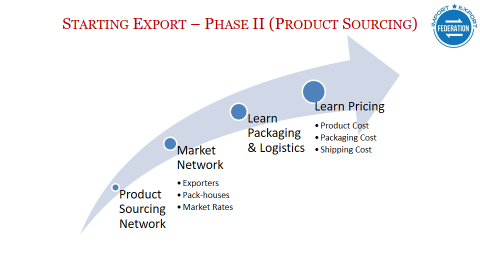
PHASE 2: PRODUCT SOURCING

Product sourcing

1. Product Sourcing Network

Product sourcing is crucial in exporting as it affects product quality, cost, and availability. Good sourcing improves cost savings, quality control, time efficiency, and market access while delivering a competitive advantage. But along with product sourcing, building up a good product sourcing network is just as important, if not more. For starters, a product sourcing network provides access to products and suppliers while ensuring quality and timely delivery.

It also reduces supply chain risk, facilitates communication and negotiation with suppliers, and provides support for international trade complexities. Spending quality time exploring your product and doing actual field research will help you build a strong product sourcing network that supports you in any requirements.

2. Procurement of Goods

In the process of procuring goods, determining the products comes first followed by identifying the suppliers and negotiating terms. Here are a few questions to ask while you are going through this process:

  • How can you smartly select suppliers? Selecting smart suppliers depends on the criteria you have marked- the product quality, delivery time, and price; if they are well-reputed, if their manufacturing systems and facilities are up to mark, how responsive they are, and their long-term potential.
  • How to close deals with smart negotiation? The steps to smart negotiation are preparation, effective and open communication, active listening, offering creative solutions while seeking a win-win situation, being flexible, and appropriate follow-ups for a healthy future relationship.
  • How to identify if the goods are of high quality & ensure consistent delivery? Carry out supplier evaluation, sample testing, quality control procedures, and ongoing monitoring.
  • How can you export goods through containers and freight? You need to first determine the mode of transportation. This is followed by properly packaging and labeling goods, getting all the required documents, proper loading, and finally delivery to the port.

3. Market Network

Apart from the network in product sourcing, an export network also consists of many other people from varied sectors. This includes packaging agencies, transporters, brokers, commission agents, other exporters from India, and most importantly, importers from other countries and India as well.

This network will help you stay updated with the latest day-to-day happenings for more informed decisions. Real-time information from all fronts of the export cycle helps you stay one step ahead and carry out an export that is smooth and hassle-free.

4. Learn Packaging and Logistics

No matter what product you have, its branding and packaging greatly contribute to its export. Some certain costs and efforts are associated with packaging. Another important aspect to consider is logistics. This takes up a part of your expenses, thus it is necessary to optimize it. Understanding your product geography and the logistics connected with it becomes important.

5. Learn Pricing

At the end of the day, Import Export is a trading business, where everyone is looking for their price benefit. One major trading rule is to buy low and sell high. Becoming a master of your product prices is key as it helps you crack deals. But these aren’t the only areas where the money comes into the picture.

Some other cost elements to consider include product manufacturing cost, quality inspection cost, packaging cost, transportation cost, loading & unloading cost, certification cost, and other expenses on smaller levels.

You can find the Previous & Next Phases of the 100-Day Action Plan here! (link to previous & next blog post)

About Us

We are experts in a variety of sectors in import-export. For now, let’s check the agro sector.

Import Export Federation caters to food sections that include the most demanded export products in India. These include- Spices, Vegetables, Fruits, Packaged Food, Processed Food, Perishable & Non-Perishable Food, and Confectioneries (Biscuits, Chocolates, etc.). We are best known for training to export these products & offer throughout hand-holding.

Unlock Your Career Potential with Top Import-Export Business Courses in Pune

Are you interested in pursuing a career in international trade? Do you want to learn the ins and outs of import-export procedures and regulations? Look no further than our Import-Export Courses in Pune!

Our institute offers a range of courses designed to provide you with the practical knowledge and skills required to excel in the import-export industry. Our courses cover a variety of topics.

Our courses are taught by experienced professionals in the field of international trade, who bring real-world insights and practical knowledge to the classroom. They are dedicated to helping you build a solid foundation of knowledge that you can apply to your career.  Our Import Export Import Courses in India offer great career opportunities to business aspirants to build a successful business and career in foreign trade.

Our courses are very popular and you can see positive feedback on Google. People from all states across India participate in our courses and their success ratio is highest among other institutes in India.

Our Import-Export Courses in Pune are designed to be flexible, allowing you to choose a program that fits your needs. Additionally, we offer a range of schedules, including weekend classes and online courses, so you can balance your studies with your work and personal commitments.

One of the key benefits of our courses is the practical knowledge of import-export procedures and regulations that you will gain.

Another important aspect of international trade is Our courses cover transportation, warehousing, and inventory management, giving you a comprehensive understanding of the logistics involved in international trade.

We also cover foreign exchange management, understanding foreign exchange is essential for businesses involved in international trade, and our courses will provide you with the knowledge you need to succeed.

Marketing strategies for international markets is another important topic covered in our courses. You will learn about market research, pricing strategies, and promotional tactics. Understanding these concepts is critical for businesses looking to expand their operations to international markets.

The top sectors you can choose to start an export business from India are fruits, vegetables, commodities, processed food, textile, marine, leather, gems, and jewellery, handicraft, pharmaceuticals, and engineering. These are India’s top export sectors.

In agriculture, India’s top export products are basmati rice, non-basmati rice, sugar, wheat, pulses, chickpeas, maize, green millet, mustard doc, soybean doc, onion, green chili, ginger, lemon, pomegranate, grapes, mango, banana, jaggery, honey, red chili, turmeric, cumin, coriander, towels, blankets, etc. You can start export in these products with Federations support. We can help you provide all knowledge and guide for your first export shipment.

Finally, our Import-Export Courses in Pune will provide you with various career opportunities in international trade. You can pursue careers in import-export management, logistics management, and marketing management, among others.

In conclusion, if you are interested in pursuing a career in international trade, our Import-Export Courses in Pune are the perfect choice. With experienced professionals as instructors, practical knowledge of import-export procedures and regulations, and a range of programs and schedules, we offer everything you need to succeed in the import-export industry. Contact us today to learn more about our programs and enrolment procedures.

Why Choose Us

Experienced Faculty:

Our institute has a team of experienced faculty members with extensive knowledge and practical experience in international trade. They are dedicated to providing students with quality education and mentorship to help them achieve their career goals.

Practical Knowledge:

Our Import-Export Courses in Pune are designed to provide students with practical knowledge and hands-on experience. We offer real-world case studies, and industry visits to help students understand the practical aspects of international trade.

Comprehensive Curriculum:

Our courses cover a wide range of topics, including export procedures and documentation, logistics management, international trade regulations, and marketing strategies for global markets. Our comprehensive curriculum ensures that students have a well-rounded understanding of the import-export industry.

Career Opportunities:

Our Import-Export Courses in Pune provide students with various career opportunities in international trade. Graduates can pursue careers in import-export management, logistics management, marketing management, and other related fields.

Industry Connections:

Our institute has established strong connections with various industries and trade associations, providing students with opportunities to interact with industry professionals and gain insights into the import-export industry.

Affordable Fees:

We offer our Import-Export Courses in Pune at affordable fees, making quality education accessible to all students.

For Whom? Who can start Import Export Business? Our Import Export Courses are very designed for  

  • Students
  • Progressive Farmers
  • Farmers Producer Company (FPC)
  • Traders, Wholesalers, Distributors
  • Manufacturers, SMEs
  • Women entrepreneurs
  • Home Makers
  • Service providers
  • Online Sellers
  • Government Servants
  • Private / IT/ Banking/ Marketing Servicemen

New exporters from J&K, Delhi, Punjab, Haryana, Kolkata, Jaipur, Indore, Hyderabad, Bangalore, Chennai, Gujarat, and Maharashtra attend our programs.

People across the globe from India, as well as other countries like Dubai, Saudi Arabia, Qatar, Oman, Kuwait, the UK, Nigeria, Uganda, South Africa, and the USA, have also attended our Import Export Business Programs.

We at Federation, have many success stories to our credit which you can watch on our YouTube channel and Facebook page. You can also be a successful exporter! Thank you!

How To Start Export- Right Product Selection: IEF 100 Days Action Plan 1

So many students are often scared to start off their export journey due to a lack of confidence, or due to them being beginners. In these cases, I always mention that learning is the first step toward your success. Humans are always afraid of what they don’t know. With the right guidance and relevant information, you can definitely carry out the export of your products, no matter what they are. How do I know this? Because I have guided countless others like you before.

Having worked professionally in this field for 20+ years, I can also confirm that with a proper plan, beginners, those with less capital, or zero products or experience can also carry out export just as successfully. This carefully curated 100 days action plan by our import export expert team is a foolproof guide you need to follow to ship any product you might have!

Want a detailed and more immersive version of this plan? Excited to learn & start your import-export business with a tried and tested 100 days action plan? Join our FREE Webinar!

Before we start, you might have a question- why 100 days? The answer is pretty simple! Within 100 days, a student can learn, consume, and experience every step of import-export in a detailed way. Here is an overview of what our 100 days action plan includes, its 3 phases, and what exactly you can expect from the after-course service!

The Federation’s 100 Days Action Plan

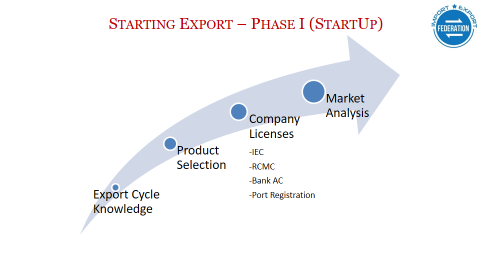
PHASE 1: STARTUP

1. Take Complete Knowledge of the Business you want to Start

Like any business process, there are several steps involved when you export. Everyone starts out with the basics, and a thorough understanding of the export cycle, the order of steps, and an overview of what happens at every stage are important.

But it doesn’t just end there- you should also have a good understanding of the products you have and the business you wish to start. Reading blogs about the market trends and export trends of your products while also watching youtube relevant videos of the same will help you tremendously. This helps you get familiar with both the product and market along with its trends and terms.

2. Right Product Selection

The actual backbone around which everything else revolves in export is your product! You can’t simply select a random product one day and start exporting it the next. The right product is a balance of what you are passionate about and its high potential in global markets. Here are a few questions you should think deeply about before you select a product to export:

  • Is it made in India?
  • What is its demand & supply?
  • How does it fare in international markets?
  • Who and what are your competitors?
  • What is its growth potential? Which countries does it do well in?
  • What are its current export numbers and prices?
  • Does it have heavy trade regulations?

3. How to establish an Import Export Company?

1. For any new business entity, it first needs to be seen as a legal structure in the eyes of government laws. For this, certain guidelines need to be followed. These include:

  • Appointing a director
  • Appointing lawyers/CA/CS
  • Naming your business appropriately
  • Government registration
  • Types of government registrations [Sole proprietorship, partnership firm, LLP (Limited Liability Partnership), Private Limited Company, Public Limited Company, Co-operative society]

2. Here is also a comprehensive list of all the documents needed to start a business entity:

  • The Partnership Deed
  • PAN Card
  • ID Proof (Aadhar card/Passport/Electricity Bill/Driving Licence/Telephone or Mobile Bill)
  • A fixed business address
  • Partner documents
  • GST Registration
  • Details of the Bank Account

3. The process of port registration is pretty straightforward. You must fill in the form, and have specific documents ready for inspection. What documents do you need for a Port Registration?

  • Copy of PAN card
  • Copy of IEC
  • VAT & Sales tax copy
  • Registration/exemption certificate
  • A D code letter from your bank
  • Latest passed S/Bill
  • A balance sheet of last year
  • Forwarding letter to customs

4. Documentation

The documentation part of Import Export might be tedious, but it is an integral part of the process. You will be asked to produce the appropriate documents at each step of export. This is why you should have a fair idea of all the types of documents, what they do, and when they are required.

At all times, you should have your IEC (Import Export Code), RCMC (Registration-cum membership certificate), partnership deed of export, and personal identification documents with you. Apart from those, here is a list of 10 documents you need for export:

  • Bill of Lading
  • Commercial invoice cum packing list
  • Shipping Bill/ Bill of Export
  • Proforma Invoice
  • Export Order or Purchase Order
  • Certificate of Origin
  • Bill of Exchange
  • Letter of Credit
  • Inspection or Quality Check

Check out this blog for a detailed explanation of all these documents.

The core documents are the IEC and the RCMC. With the Federation’s Online & offline courses, and JNPT visit, or Dubai Business Tours, you can get an IEC for free. You can apply for the RCMC from the FIEO website.

The full form of RCMC is Registeration-cum Membership Certificate, and it is issued to an exporting entity if it’s registered under the export promotion council or the commodity board of India. You need this certificate to claim export incentives and other advantageous subsidies under various schemes. With the RCMC, you can also get GST for the export of goods.

5. Market Analysis for Your Selected Product

The last step of Phase 1 is carrying out a detailed market analysis of your product. This step will determine if you can really sell your goods profitably in relevant International markets. The key to analyzing the markets of potential countries is via economic and macro-indicators, along with the demand and supply of your specific products in the country you are targeting.

This includes being aware and updated with the GDP, GDP per Capita, inflation, and essential trends about how products similar to yours are faring in these nations. You can check out the Import Export Federation’s YouTube channel for regular product-specific videos that show how your commodity is performing along with its trends in a country! Here are 2 more steps to carry out for well-researched market analysis:

A. Trade Data Analysis

The analysis of trade data can help reveal key insights about the global markets and contribute to better business decisions from your end. You can also arrive at conclusions about the demand and supply of your products in a specific country you wish to export to.

B. Market Rates

Getting the market rates is the next step to a full-fledged market analysis. With the fluctuations of a country’s currency rates, the rate of import and export of goods from the nation is also affected. This also includes being familiar with market-specific requirements. Each country has its own set of rules and regulations, which often differ greatly from one another. Your product might have an easy way into a nation but may need more documents and certifications in another.

You can find the Next 2 Phases of the 100 Day Action Plan here!

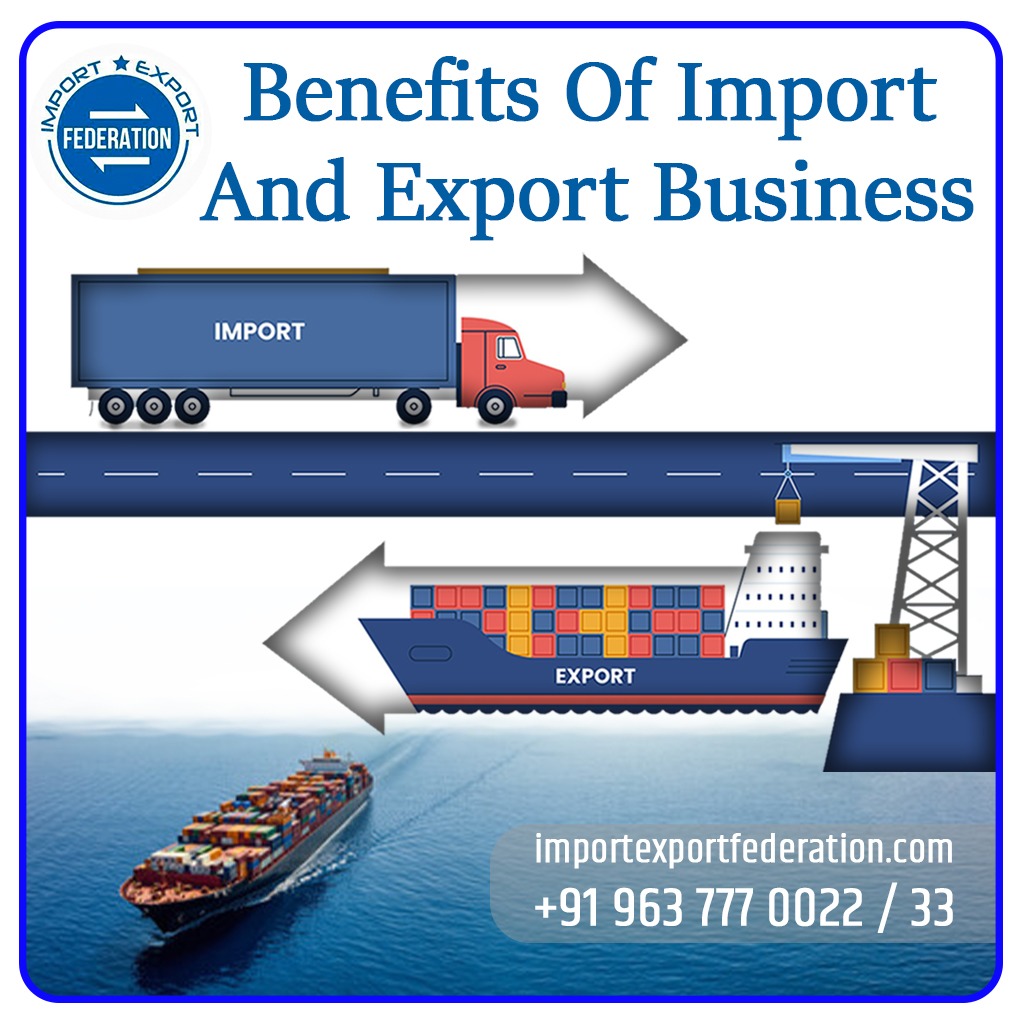
Benefits of Import And Export Business

Import and export are essential components of international trade, which is the exchange of goods and services between countries. This exchange of goods and services has been around for centuries, and it continues to be a significant factor in the growth and development of economies worldwide. In this article, we will discuss the benefits of import and export, both from the perspective of businesses and countries.

Benefits of Import

  1. Access to a wider range of goods

By importing products, businesses can access a wider range of goods than what is available domestically. This increased variety of products can help companies offer a more extensive selection to their customers, making their businesses more attractive and competitive.

2. Lower prices

Importing products can also help businesses lower their costs. By importing products from countries where labor or production costs are lower, companies can take advantage of the price difference to save money. This can translate into lower prices for consumers, which can increase demand and boost sales.

3. Improved quality

In some cases, imported products are of higher quality than what is available domestically. By importing these products, businesses can offer higher quality goods to their customers, which can improve their reputation and increase customer loyalty.

4. Access to new technologies

Importing products can also give businesses access to new technologies that may not be available domestically. This can help companies improve their production processes, increase efficiency, and reduce costs.

5. Diversification

By importing products from multiple countries, businesses can diversify their supply chain, reducing their dependence on a single supplier or country. This can help mitigate the risk of supply chain disruptions and ensure continuity of operations.


Benefits of Export

  1. Increased sales

Exporting products can help businesses increase their sales by tapping into new markets. By exporting, businesses can reach customers who may not have access to their products domestically, increasing their customer base and revenue.

2. Diversification

Exporting products can also help businesses diversify their customer base, reducing their reliance on a single market or country. This can help mitigate the risk of market fluctuations and ensure business continuity.

3. Improved economies of scale

By exporting products, businesses can increase their production volumes, which can lead to improved economies of scale. This can help businesses reduce their production costs and increase profitability.

4. Access to new technologies

Exporting products can also help businesses access new technologies by collaborating with international partners. This can help businesses improve their production processes, increase efficiency, and reduce costs.

5. Improved reputation

Exporting products can also help businesses improve their reputation by demonstrating their ability to compete in international markets. This can help build brand recognition and increase customer loyalty.

Benefits for Countries

  1. Increased economic growth

Import and export can both contribute to increased economic growth by facilitating the flow of goods and services between countries. This can lead to increased employment opportunities, increased income, and improved living standards.

2. Improved international relations

International trade can also improve international relations by promoting cooperation and interdependence between countries. This can help reduce the risk of conflicts and promote peaceful coexistence.

3. Access to new markets

By exporting products, countries can access new markets, increasing their exports and generating revenue. This can help countries diversify their economies and reduce their dependence on a single market or country.

4. Access to foreign investment

International trade can also attract foreign investment to countries, leading to increased capital flows and improved economic growth.

5. Improved competitiveness

International trade can also help countries improve their competitiveness by encouraging innovation, improving production processes, and enhancing product quality.

Conclusion

Import and export are essential components of international trade, which can provide numerous benefits for businesses and countries. By accessing a wider range of products, lowering costs, improving quality, diversifying supply chains, and accessing new technologies, businesses can become more competitive and profitable. Similarly, by increasing sales.

Why You Should Export in Dubai- 4 Amazing Benefits! 

Should you export in Dubai? Yes! This is why:

One of the biggest international markets for Indians is the Dubai market. Exporting in Dubai is a great opportunity for countless Indian exporters who are looking to ship their products to make profits from countries. Being located strategically, Dubai also has great connections with India- especially in the field of import-export.

In fact, so many exporters already exist in this market and have built a significantly big business with Indian products. The immense Indian population in Dubai is another factor that adds to the increased demand for Indian products in the nation, and with a long history of trade, Indian exporters are at an advantage with their products.

But you can’t just get up and decide you want to export in Dubai all of a sudden. It requires a significant amount of preparation, knowledge, and training to be able to sell your products in a market. With the Import Export Federation, it becomes much easier to take your products to the markets of Dubai and pitch them directly to the buyers present there.

This is possible through our Dubai Business tour which takes you to the markets and ports of Dubai, and you can interact with the officials and buyers over there. Here are some more amazing benefits that make export in Dubai extremely favorable to Indian exporters.

Why You Should Export in Dubai? 4 Amazing Benefits!

benefits of export in dubai

1. Export in Dubai: Great Trading Scope

One of the most advantageous factors of trading in Dubai is its traditional trading culture. Natural resources like spices, minerals, pearls, and copper were traded in the UAE even before oil was. This shows a strong import-export history and presence in the nation. This is incredibly favorable to Indian exporters, as there are umpteen opportunities in already established markets, reducing the risk of export.

Plus, the Dubai market opens up the field to a larger market. Dubai is one of the main trading hubs in the Middle East and a gateway to other countries. You can find importers from countless other countries in this market as well. Its strategic location between Asia and Europe makes it the perfect connecting thread for the re-export of goods to several countries in the nation.

India also has an impending historical and cultural connection with the UAE, making it easier for Indian businesses to set up and establish in Dubai.

2. Export in Dubai: Familiar & Friendly Environment

Dubai has a highly developed market infrastructure, from the closeness of European & Asian markets, great connectivity, proficient airlines, local transport, and an efficient logistics system. Plus Dubai’s pro-business environment provides more incentives and brings in more foreign investment opportunities.

There are tax-free zones, streamlined customs processes, and developed infrastructures in this nation. The environment is also familiar and friendly to Indians with a significant Indian population present in the trading industry.

benefits of export in dubai

3. Export in Dubai: Trade Laws & Welfares

With some of the most advantageous laws in Import and Export, the laws in Dubai are made to promote friendly competition. They are also good at saving the rights and best interests of businesses and customers. This builds a dependable foundation for SMEs and other organizations. Further, the tax benefits from Dubai are fairly beneficial, allowing international traders to trade with lesser regulations.

4. Export in Dubai: Ever-Growing Demand

Dubai has a growing economy and a rapidly expanding population, and both of these factors are driving up a good demand for goods and services from India. As Dubai’s economy continues to grow, more and more people are moving to the city, which is also leading to increased demand. This creates opportunities for Indian businesses to tap into this demand through export.

Additionally, Dubai is home to many large companies, many of which are involved in construction and real estate development. These companies require a wide range of goods and services, from raw materials to finished products. This is another market opportunity for the Indian export of such products.

benefits of export in dubai

Conclusion

In Dubai, the import of services and goods takes up 68.4% of the GDP. That combined with all the points in this blog makes export in Dubai extremely favorable to Indian exporters, businesspeople, entrepreneurs, farmers, and more. With the Federation, you get to learn and practice 360-Import Export.

With our online & offline courses, you can learn the end-to-end export cycle, and get practical experience with our JNPT visit and Dubai Business Tours. Register and start your Import Export journey today!

Exporting to Dubai: Discovering Profitable Business Ventures

Exporting to Dubai: Discovering Profitable Business Ventures

Looking to expand your business internationally? Dubai presents a promising destination for growth and profitability. With its booming economy, strategic location, and investor-friendly policies, this global business hub offers immense opportunities for exporters.

Dubai’s strategic location at the crossroads of Europe, Asia, and Africa makes it a gateway to global markets. Its modern infrastructure, state-of-the-art logistics facilities, and advanced ports provide seamless connectivity, ensuring efficient export processes.

Moreover, Dubai’s business-friendly policies, including free trade zones and tax incentives, attract foreign investors. These incentives, coupled with a robust legal framework, ease the process of setting up businesses and safeguard investments.

Dubai’s diverse economy welcomes various industries, from technology and finance to tourism and retail. By leveraging Dubai’s strong consumer market and highly-skilled workforce, exporters can tap into a wide range of potential clientele.

In this article, we will explore the lucrative business ventures Dubai offers, providing insights into key sectors and market trends. Whether you’re a small business owner or a corporate executive, this guide will arm you with valuable information to unlock the potential of exporting to Dubai.

Embark on a journey to lucrative opportunities and take your business to new heights in the vibrant city of Dubai.

Bill of Lading and Waybill: What’s the Big Difference 2023

Want to know the difference between bill of lading and waybill? Read on below!

Out of the countless paperwork, the 2 main documents used to ship your goods by sea are the bill of lading and waybill. People often get confused between the two, but they carry very specific functions while exporting. But that does not mean they are not related to each other! There is a big difference between waybill and bill of lading, based on where and why the 2 are used and needed.

To put it simply, the Bill of lading exists as a receipt of your export goods and a contract of transportation. On the other hand, a waybill stands as evidence of the bill of lading and that it is valid as a contract. Here is a detailed breakdown of the difference between waybill and bill of lading, and what each one do

Major Difference between Waybill and Bill of Lading:

Difference between Waybill and Bill of Lading

1. Bill of Lading:

According to the U.N. Commission on International Trade Law, the transport of goods by sea requires a document called the Bill of Lading (B/L) to be provided as information, receipt, and contract about the transaction. The B/L can be issued by various parties involved in the shipping process, such as the carrier, transport agent, shipping company, vessel operator, or even the captain of the ship.

The B/L serves multiple important functions, including serving as a receipt for the goods being transported and confirming their apparent condition. It also serves as evidence of the contract of carriage and a document of title, transferring ownership of the goods to the holder, who may collect them from the carrier at the destination port.

Additionally, the B/L is considered a negotiable instrument and is accepted by banking institutions. The names of the shipper, the carrier, the exporter, the consignee, and the notify.

A Bill of lading needs the following information to be considered valid:

  • The accurate name and address of the shipper
  • The accurate name and address of the carrier
  • The name and nationality of the vessel
  • Unloading and loading final destinations
  • The accurate name and address of the receiving entity or person of your goods
  • The number of packages, their quantity, weight, and any identifying marks if any)
  • INCOTERMS
  • The number of original copies submitted
  • The date, location, and signature of either the carrier, shipping company, vessel operator, or captain
Difference between Waybill and Bill of Lading

2. WayBill:

A Waybill is a shipping document used to track the movement of goods during transportation. It contains information about the shipment, such as the origin, destination, and route, as well as details about the consignor and consignee.

The Waybill is used by the carrier, such as a shipping company or a trucking firm, to document the movement of the goods and to keep track of their progress. The Waybill typically includes the following information:

  • The name and contact information of the consignor (the person or company sending the goods) and the consignee (the person or company receiving the goods).
  • A description of the goods being shipped, including the type, quantity, and weight.
  • The origin and destination of the shipment, along with the route that the goods will take.
  • The date and time of pick-up and delivery.
  • Any special instructions or requirements for the shipment, such as temperature controls, handling instructions, or customs requirements.
  • It is important to note that the Waybill does not transfer ownership of the goods or serve as a receipt for the goods being transported. Instead, it is simply a document used to track the movement of the goods and to ensure that they are delivered to the correct place and at the right time.
  • The Waybill is typically created by the carrier and can be an electronic document or a paper document. It is used in combination with other shipping documents, such as the Bill of Lading or the Delivery Order, to ensure a smooth and efficient transportation process.
Difference between Waybill and Bill of Lading

Difference between Waybill and Bill of Lading: Are Both Necessary?

It depends on the specifics of the shipment. In general, a Bill of Lading (B/L) is considered to be the most important document for the shipment of goods by sea. As it outlines the terms and conditions of the transportation, including the description of the goods, their weight and volume, and the destination, it also confirms the receipt of the goods in good condition and serves as proof of ownership.

A Waybill, on the other hand, is used to track the movement of goods and to keep track of their progress during transportation. While it is not as comprehensive as the B/L, the Waybill is still useful in ensuring that the goods are delivered to the correct place and at the right time.

In some cases, both the B/L and the Waybill may be necessary for the shipment of goods. For example, the B/L may be required for the legal and financial aspects of the shipment, while the Waybill may be necessary for tracking and coordination purposes. Ultimately, the necessity of both documents will depend on the specific requirements of the shipment and the parties involved in the transportation process.

Conclusion

Now that you are aware of the difference between waybill and bill of lading, while also understanding the importance of both, you can learn how to acquire them both from the Import Export Federation. With online and offline courses that help you master the entire export cycle, right from product selection to documentation to finding buyers, to customs clearance, and finally shipping your goods, you get full support from the federation to export even if you are a beginner.

With our JNPT visit and Dubai Business Tour, you can visit actual markets and experience export practically while interacting with officials and importers from various countries. Start your export journey with us today!

5 Highly Effective Terms of Payment in Export Made Easy!

Once you find the right buyers for your export products, there is a crucial aspect left for the exporter. These are the terms of payment in export. This is an integral part of any trade, in which the importing party and exporting party come to an agreement regarding the finalized payment. Lots of negotiation can go into deciding the export payment terms between the buyer and seller.

If you are a new exporter, there is a risk that goes into invoices, which specify the total amount of the products, along with the preferred method of payment. Terms of payment in export also differ more and are riskier due to the added factor of physical distance and contrasting laws and legalities between the 2 parties of different countries.

This is why there exist a variety of terms of payment in export that exporters and importers can take advantage of. These include mutual terms of the agreement, but all differ from each other. Some might be more favorable to the exporter, while others might favor the importer more.

The export payment terms also depend on the previous relationship and trading history between the 2 parties. So, how many terms of payment in export are there? And how can you choose the best one for you? Read on to find out!

What are the Different Terms of Payment in Export?

Clean Payments

The first 2 terms of payments in export are called ‘clean payments.’ In these, all the shipping documents only circulate between the 2 parties involved directly. With no involvement of a third party, these are usually uncomplicated and cheap as well.

1. Open Account

In the many terms of payment in export, the open account one is built on trust and is more favorable to the buyer or importer. The payment is done after receiving the goods. A credit period is agreed upon beforehand of a certain number of days and the payment is made at the end of it.

There is also a gap between the dates of the receipts of the purchase order and the final payment(s). This gap belongs to the time taken for production and shipping.

This method can prove to be more favorable to the buyer, due to the final payment coming after the goods have reached. The exporter can face a huge gap in time while receiving their amount. This is why this method is usually opted for by parties with extremely high trust in each other or if there is a promise of high levels of volume later on.

Terms of Payment in Export

2. Cash in Advance

Acting as the opposite of an open account, the cash-in-advance payment method allows the goods to be shipped only after the payment (partial or full) has been completed from the buyer’s end. A receipt of payment must be produced for the same. This method of payment is highly favorable to the exporter, but a significant risk for the importer or buyer.

3. Documentary Collection

The third in the terms of payment in export is called a documentary collection. This method involves the involvement of a third party, which is the bank. Both parties involve their own banks. First, the exporter ships their products. Then they submit the shipping documents and collect orders from their own bank. This bank then sends this to the importer’s bank along with instructions.

The bank later passes this information to the importer who pays its own bank. Finally, there is a transfer from bank to bank before the amount is received by the exporter. There are 2 types of Documentary collections which are:

  • Cash against documents: This payment term takes place when the importer is compelled to pay their amount “due at sight”. This basically means that the buyer makes their payment before the documents are released by their own bank or the collecting bank.
  • Documents against acceptance: For this payment term, there is an arrangement involved. This permits the buyer to make the payment after a specific duration of time. There is a time draft accepted by the exporter which they promise to adhere to. After the acceptance, the documents are released to the buyer by the bank.
Terms of Payment in Export

4. Letter of Credit

One of the most usual terms of payment in export is the letter of credit. This is due to its reliability and common nature in international trade. In this method, a Letter of Credit is issued by the bank of the buyer and acts as a commitment to the exporter. This letter of credit acts as a pledge regarding the timely completion of the payment to the seller.

Read this blog for a list of 10 documents required for export from India!

Terms of Payment in Export

5. Consignment

The consignment type of payment applies to the export which involves a third-party distributor. In this, the exporter gives their goods to a foreign distributor who then sells them to the buyer. With the consignment method, the exporter receives the payment only after the goods have been sold to the end customer. It is similar to the open account method of payment.

Like the open account method, it’s advisable to opt for this only if the third-party distributor is reliable and reputable. Also, make sure you have insurance for the same in place.

Read this blog to know about Cargo Insurance- what it is and its types!

Conclusion

These days, the global market requires exporters to offer the best possible offer to their customers with the appropriate prices along with the right payment methods. This is why these terms of payment in export are important knowledge every exporter, and importer, should be accustomed to.

Apart from payment terms, there are many more terms, and importexport knowledge one needs to start their export. Along with learning the right market trends, finding trustworthy buyers, accurate documentation and customs clearance, and practical experience, you can learn and master the right and profitable way to export with the Import Export Federation. Register and start your journey via our online, and offline courses, port visits, and market tours today.

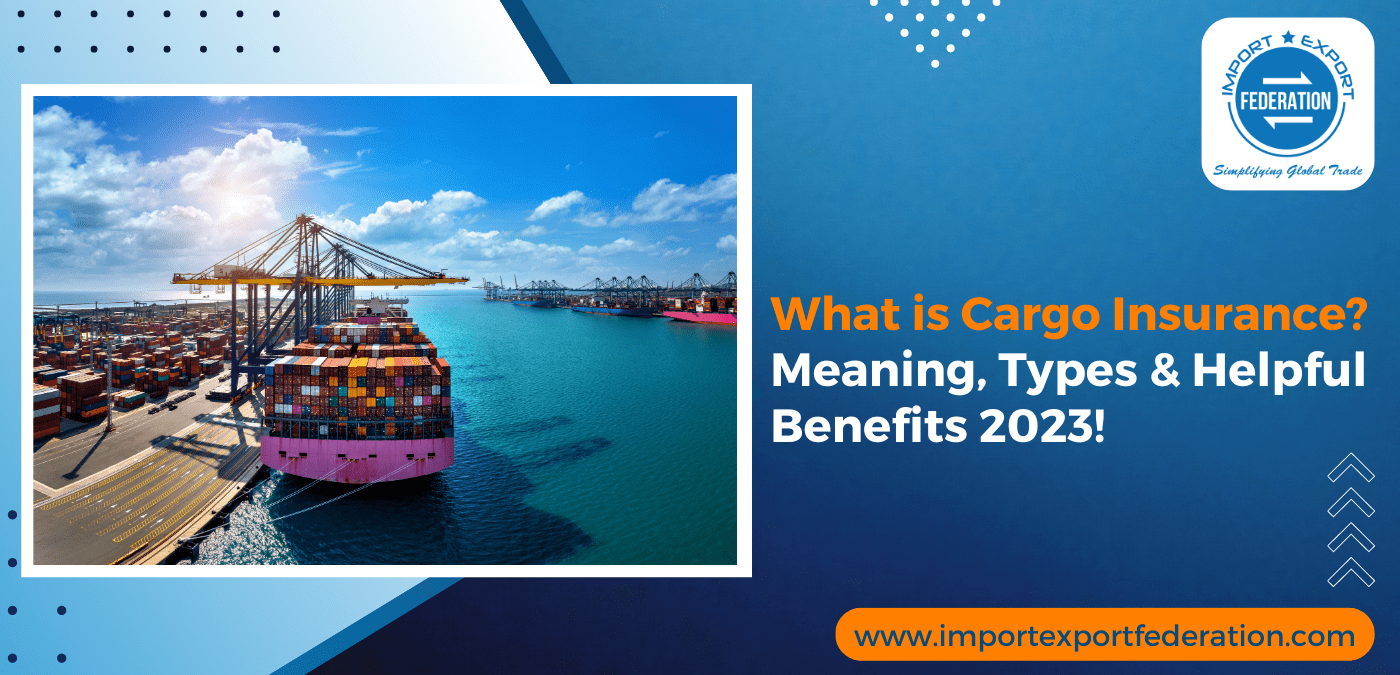
What is Cargo Insurance? Meaning, Types & Helpful Benefits 2023!

One of the most unaccounted things happening to your cargo is damage due to unprecedented events during transit. This includes damage caused either on the road, sea or in the air. Many times there might be accidents during transits, causing the loss of cargo. If the loss is huge, it can’t be compensated simply through carrier liability. The very concept of cargo insurance deals with these situations and acts as a risk management factor.

Plus, the terms and conditions along with the next steps to take when a problem like this occurs might be difficult to understand. Hence safe cargo insurance in place beforehand is always a better option to take while exporting. But what exactly does it do? What are its other benefits, and the types it comes in? Let’s find out in this blog!

What Exactly is Cargo Insurance?

To put it simply, cargo insurance prevents financial losses caused by damaged or lost cargo. Like any normal health or life insurance, it’s a safety belt and risk management tool that is adapted by exporters before shipping their cargo. There also exists a cargo insurance policy under which incidents such as natural calamities damage, cargo renunciation, accidents of vehicles, acts of war, piracy, etc. come.

Types of Cargo Insurance

Broadly, there are two types of cargo insurance- land and marine cargo insurance.

1. Marine Cargo Insurance

Marine cargo insurance covers events such as bad weather, loading, and unloading, etc. This type of insurance covers the cargo when it is on air and shipping lines.

cargo insurance

2. Land Cargo Insurance

Unlike marine cargo insurance, land cargo insurance covers cargo that is transported on road. The vehicles it covers include trucks and other utility vehicles. This covers accidents such as theft, risks in freight shipping, collisions, etc. As it is limited to road transport, it only covers the shipping that takes place on roads.

Apart from these, many policies come under freight insurance. These are:

cargo insurance

1. Single Coverage

This type of cargo insurance only covers one single shipment. You get coverage on one shipment. This is immensely useful for people who are just starting or those who have small businesses and don’t send out shipments that often.

2. Contingency Policies

This type of cargo insurance needs additional charges and more time due to its ability to provide legal bodies. These legal bodies are responsible for passing an order so that consumers pay when they are proven responsible.

cargo insurance

3. Open Coverage

For those businesses that use air and marine shipping lines more frequently, open coverage is the best option. You can cover multiple shipping in a year over a certain period. You can learn both permanent and renewable coverage under this.

4. All-Risk Coverage Policy

This policy is created to cover external factors that can’t be controlled. But the products it covers are particular and are not vulnerable to leaking, any damage, or spoiling. This policy does not cover force majeure, war damages or losses, damage due to negligence, abandonment of cargo, or rejection by customs.

5. Free from Particular Average

The free from the particular average is made specifically for force majeure which means completely unprecedented events. These include weather conditions, stealing, sinking, etc. Unlike all-risk coverage policies, this policy covers major accidents.

6. General Average

If two or more businesses are sending their cargo on the same ship, his type of policy defines that a business owner must compensate the damages of the products of the other business as well, even though their own are unharmed.

How Exactly Does Cargo Insurance Work?

Majorly, cargo insurance is broadly based on policy clauses that are outlined. The clauses mentioned specify how damage can be caused to these cargos. You first pay the premium up and front, after which a policyholder can then claim for any loss or damage that happens when shipping. After the claim is submitted, the claim adjuster checks it and if the damage is present under one of the clauses, then a settlement is reached.

If you are making a claim, the things you should keep in mind are the description of the items lost or damaged, the inventory number, a description of the damage that has occurred, the age of the item along with the date of purchase or procurement, the location, an accurate of the original cost, and the amount to be claimed, depending on the cost of repair or product if there is a total loss.

Conclusion

Around 700 to 1000 containers are lost or damaged to sea every year on average. Precaution is better than cure! If you are someone who is starting out exporting, or even someone who is experienced, it’s smart to get cargo insurance for your shipment.

For more information on how to start exporting, and to know about detailed import-export processes right from product selection to find the right buyers and complex documentation and customs clearance, check out Federation’s online and offline courses and port visits and tours. Register and start your journey today.

How to Get Orders for Export- 6 Helpful Tips!

The export process can be long and complicated if you don’t know the correct information. It starts with complex documentation, production, manufacturing, and setting up your business. But at the end of it, one big question still arises- how to get orders for export?

The second half of the process comes after finding buyers including shipping, customs, etc. But to reach that stage, you first need to find and convince importers willing to buy your products at a price that is sustainable and profitable for you. These are the ones who will invest in your hard work.

To put it simply, any export business cannot survive without export orders. This is why every exporter needs a viable strategy that lets them acquire foreign orders. For this, one thing to keep in mind is that your total exporting cost, which includes the production and export costs, must be lesser than the average value in the global market.

Another factor about international trade is that it can be difficult to accommodate the rules of various countries for exporters who are just starting. Thus it is incredibly helpful to learn the entire import-export process properly beforehand, especially if you are a beginner. Check out here how you can do so! Here are a few tips to include in your full-fledged strategy on how to get orders for export from outside India!

How to Get Orders for Export from Outside India? Follow these 6 Tips!

1. How to Get Orders for Export? Market, Product, & Buyer Research

In a business, if you are not well-versed with your product, its target market, and its trends, then your export is a fruitless attempt! To close an advantageous deal, you must be able to answer any question related to your product, it’s pricing, and anything else.

You will also need to conduct proper market research to find out the right target market, countries, and finally buyers from that country. Remember- to convince someone your product is great, you must first believe it yourself!

how to get orders for export

2. How to Get Orders for Export? Build a Digital Presence

One of the biggest means to connect with International Importers is via an online presence. These days you need an online presence in almost every field, and online marketing techniques have also made it easy for you to reach the people who want your product much easier! With so many means of communication, exchanging information with buyers is an easy task. But what do you need for an export business?

The first and foremost step to take is to set up a professional website. You can list all your products, testimonials, and relevant information in one place and convey your business goals at a single glance. But just a website won’t be enough, you also need SEO activities to rank your website, and other online marketing practices for better reach via platforms like Facebook, LinkedIn, Twitter, Instagram, etc.

3. How to Get Orders for Export? Visit Trade Fairs, Exhibitions, and Ports

If you don’t put yourself out there, no buyer can find you! Frequently visiting trade fairs and exhibitions related to your products and shipping ports help you get familiar with these ports and also gives you a chance to interact with importers! These places are where buyers are present to get more options to choose from. This is the perfect opportunity for you to pitch your products convincingly and attract foreign buyers.

4. How to Get Orders for Export? Communication is Key!

Every seller has one common attribute- they are excellent at communication! The way you communicate greatly depends on how well you understand what your potential buyer wants along with their pain points. Once you have these down, you will find the best points to hit with. This will also help you negotiate better while drafting a contract.

Make sure you strongly emphasize the unique points of your products and what sets them apart from the rest of their competition in the market. An open and flowing conversation helps as well. For example, if your buyer asks you to send over some samples, don’t refuse. This can help in building a long-term seller-buyer relationship.

5. How to Get Orders for Export? Take Help from Government Embassies

Import Export is significantly promoted by the government of India. For the same, many government schemes and policies exist that can help you find the right buyer. If you are an export beginner, you can still try to convince the embassies with clear explanations about your business and products.

6. How to Get Orders for Export? Look for an Agent

It’s never wrong to ask for help, especially when starting off. In this case, foreign agents can truly help you find the right international buyers for your products. With challenges such as complex custom rules, differing import regulations based on different countries, and a language barrier, an agent can help you get international export orders!

how to get orders for export

Conclusion

We hope these tips helped you answer the question of “how to get orders for export” to a certain extent. The best means to find the right buyers is to go to where they are and pitch your products to them. Dubai is a massive ground where you can find countless Importers from over 190 countries in one place from multiple industries!

With the Federation’s Dubai Business Tour, you get an opportunity to visit these markets and ports and a chance to talk to these importers as well! Register and start your Import Export Journey today!

Check out this blog for the 12 Best Import Export Business Ideas!

Which Are The Top 10 Largest Ports in India?

Being in a strategic location, our nation is surrounded by oceans and seas on 3 sides out of 4 along with a coastline of more than 7000 km. To our east, we have the Bay of Bengal, we have the Arabian Sea to the west and the Indian Ocean to our south. Due to this, we have some of the best and largest ports in India! These include both major and intermediate ports, out of which the former is under the government and the latter under state jurisdiction.

This makes India an opportune hub for global trade! These ports are incredibly useful to Indian importers and exporters, as well as support the Indian economy. Here are some of the largest ports in India!

Top 10 Largest Ports in India!

1. Largest Ports in India: JNPT Port- Mumbai

Located in Navi Mumbai, the Jawaharlal Nehru Port Trust is by far the largest container port in India. It’s also known as Nhava Sheva and plays an extremely important role on our western coast. It also ranks as the 28th biggest port worldwide. Inside this port are 50 ICDs (Inland Container Depots), 30 CFS (Container Freight Stations), and a Customs House. Today, almost 55% of total container cargo is shipped via this port.

Since the start, it has crossed Twenty-foot equivalent units every year as well. You will commonly see exports of machinery, textiles, chemicals, pharma products, and meat through this port. Import products include machinery, oils, and plastics among a few.

You can get a chance to pitch your product directly in this port with the Federation’s JNPT tour! Get the live experience of customs clearance and export at one of the largest ports in India!

2. Largest Port in India: Port of Mundra

Operational since 2001, the Port of Mundra is India’s largest private port and majorly works in bulk cargo and containers. It is also at a strategic location, thus being well connected to other hub spots of India with railway and highway routes. In this port exists MPCT (Mundra Port Coal Terminal), which is the biggest coal-importing terminal in the world. Every year, around 40 million tons of coal are imported through here.

Largest Port in India: Port of Mundra

Most of the major export this port sees is export of agriculture products, crude oil, edible oil, coal, liquid bulk, fertilizers, chemical, minerals, project cargo, and automobiles. This port is also home to 3 pipelines, and storage facilities for coal, machinery, and agricultural products. Other facilities include coal processing stations, wheat bagging units, steel handling yards, and storage tanks for liquid cargo.

3. Largest Ports in India: Port of Chennai

A fun fact about this port, this is the 3rd oldest port in India! Acting as the biggest port on the east coast of the Bay of Bengal, the Port of Chennai is often referred to as the Gateway of South India due to its massive impact on commerce and global trade in the southern region. It is segregated into 3 zones- North, South, and Central with numerous berths distributed among these. In terms of connectivity, this port has a direct association with more than 50 ports and also ranks in the top 100 of worldwide TEU handling.

You will see the export of vehicles including automobiles and motorcycles, cotton, textiles, leather, iron ore, granite, industrial freight, coal, petroleum products, fertilizers, and agricultural products. Some major imports include raw cotton, wheat, iron, steel, and machinery. The port of Chennai is also on its way to increasing its total capacity to 140 million tons.

4. Largest Ports in India: Port of Kolkata (KoPT)

This is the first port on this list that is not a seaport. Acting as one of the largest river ports in India, the Kolkata port is a homogeneous freshwater port and is a part of the river Hooghly. Some major export commodities of this port are jute, textiles, copper, iron ore, and chemicals.

Northeast India along with neighbouring countries such as Bhutan and Nepal have been using this port since the early 16th century. The port of Kolkata is also famous for its dry docks being the largest in India!]

Largest Ports in India: Port of Kolkata (KoPT)

5. Largest Ports in India: V.O. Chidambaranar Port

The next on the list of largest ports in India is VOCP. Also called Tuticorin Port, this port is a major hub in the southern region of our country. In India, it is the 4th largest port and spans across 8 square km. You can find containers from China, Sri Lanka, the USA, the Mediterranean, and Europe here.

The import products include cement, phosphate, coal, petroleum, fertilizers, and edible oils. Raw ore & minerals, sugar, granite, building materials, general cargo, and limonite are some of the export products.

Largest Ports in India: V.O. Chidambaranar Port

6. Largest Ports in India: Port of Kandla

Enclosed by a natural harbor, the Port of Kandla is located on the Gulf of Kutch and is a huge seaport of India. It is famous for the import of petroleum and refined products. In fact, over 50% of the traffic in Kandla is via these products. Chemicals, steel, iron, machinery, and petroleum are the import products of this port. The major products exported from this port are textiles, grain, oil, and salt.

7. Largest Ports in India: Port of Mumbai

Launched by the British during the 17th century, the Mumbai Port, also known as Bombay Port Trust is a huge part of India that spans over 400 square km. Its nature is that of a natural deep-water seaport and its location is on the Arabian sea.

Its operation falls under the MBPT and unlike its next-door counterpart Nhava Sheva, the port of Mumbai handles general cargo and bulk. This port is built to accept crude and petroleum vessels from Iran, the Middle East, and other nations.

Largest Ports in India: Port of Mumbai

8. Largest Ports in India: Port of Visakhapatnam

Serving as the largest port in Andhra Pradesh, the Port of Visakhapatnam ranks 3rd largest in cargo volume and is at a close distance from both Chennai and Kolkata ports. Most export products on this port come from Central and South India.

The major export products include manganese nodules, steel products, coal, crude oil, general cargo, iron ore, and petroleum derivatives.

9. Largest Ports in India: Port of Cochin

Situated on the Arabian coast, the Kochi port usually sees traffic from the route of the Indian Ocean. This port is operational under the CoPT (Cochin port trust) and was launched in 1928. It is in close vicinity of facilities in Kochi such as the shipyards, refineries, and the Kochi Marina as well. Further, it is linked to the southern region of India via railways, airways, and highways.

Largest Ports in India: Port of Cochin

10. Largest Ports in India: Port of Hazira

Last but not least on our list is the Adani Hazira Port, also known as the Surat Port. This is a crucial port for Petroleum and LNG and falls under AHPPL (Adani Hazira Port Private Limited). The commodities it handles include breakbulk, bulk liquids, petroleum, containers, edible oils, chemicals, crude oil, and automobiles. This hub majorly takes care of cargo from Africa, the Middle East, America, and Europe.

Conclusion

A few of the other ports that missed the list but are significantly some of the largest ports in India are Mormugao Port (Goa), Ennore Port (Chennai), New Mangalore Port (Karnataka), Paradip Port (Odisha), Panambur Port (Mangalore). For exporters, producers, and manufacturers who don’t live around coastal areas or any major seaports, there are also countless dry ports through which the goods are transported to seaports.

For more in-depth knowledge to practically learn how to export your products from India, check out Online and offline courses from the Federation! And if you wish to actually visit the JNPT Port or take a trip and interact with buyers from Dubai, you can check out our JNPT Visit and Dubai Business Tour! Register and Start your journey today!