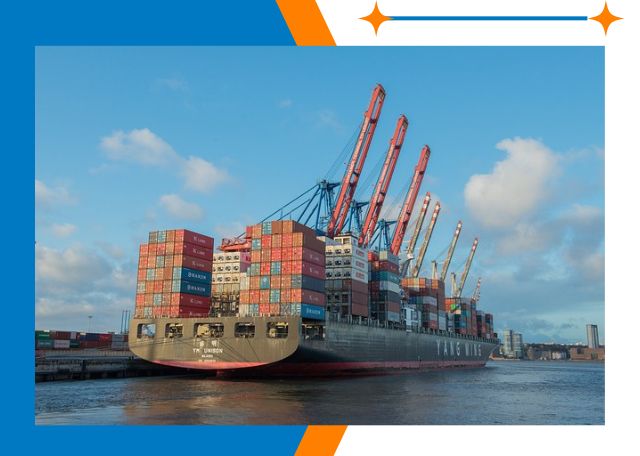
CHA in Shipping: Helpful Guide to Customs House Agent 2023

Have you heard of the term CHA in shipping or CHA in export? Are you wondering who these are exactly, and what role they carry out? Read on to find out!

One of the trickiest parts of carrying out an export is clearing through the customs procedure. Due to the shipping rules varying from country to country, sending your export shipment through customs can be a tedious process and can get highly complicated. The hardest part is to fill out all the relevant paperwork, which contains loads of new information not everyone is familiar with. You need an extremely strong knowledge of the customs regulations from other countries to smoothly work through this challenge.

This is where a CHA or Customs House Agent comes in. The role of a CHA is to aid exporters to be updated and accurate with their documents, and ensure a smooth customs clearance process. Another name for a CHA is also Customs Broker. You need to be holding the relevant license registered by the government to practice. Let’s try to figure out what exactly a CHA in shipping does, and how it is different from a freight forwarder agent.

Job Role of CHA in Shipping

Broadly, the main job of a CHA is to make documentation easier for traders at customs. They are the linking point between the customs officers and their trader clients, and aid to complete the documentation for the same and ensure no setbacks. They are also responsible for the timely delivery of the shipments. Under them comes the processing of carriages or vessels, and the clearance of transports for both outward and inward movement of different types of carriers including trains, ships, and airplanes.

A CHA also takes care of audits of the import and export of goods at the customs station. Often, a CHA in export is confused or mistaken as a freight forwarder. The main responsibilities of a freight forwarding agent include handling logistics and transportation of export. They also take care of the entire process regarding the export route and method of transportation.

Here is a breakdown of the various job tasks a CHA in shipping undertakes:

  1. Help set up various entry and shipping bills.
  2. Clearance of any vessels and entry arrival.
  3. Rates of duty and classification of tariff.
  4. Value for assessment.
  5. Currency conversion.
  6. Identify the descriptions and nature of several documents.
  7. Assessment procedures and the duty of payment.
  8. Aid in merchandise check at the customs station.
  9. Understanding and following the governing provisions and allied acts.
  10. Taking care of the bonding process and ensuring clearance from the bond.
  11. Re-importation process and well-versed with re-entry circumstances.
  12. Knowledge of drawbacks.
  13. Knowing all the offenses under Acts.
  14. The procedures for refund, any appeals procedures, and revision petitions.


Why Do You Need a CHA in Shipping?

When you sign an international deal, an expert CHA in shipping can assist you in the complicated procedures well in time for the export. Being equipped with the right knowledge, they will be clear on the terms and conditions. It is also advised for importers to keep a broker in the loop of their trading process. Even if a single document is missing, or a technicality has not been met, your export can be at risk of running into a hindrance at customs.

Advantages of Having a CHA in Shipping

1. Better Trade Decisions

With a CHA in shipping, you get technical know-how of the documentation process and necessary technicalities. This ensures full security while the actual shipment takes place. You can focus better on your business and make better and more informed decisions!

2. More Opportunities in the Global Markets

Often with changing times, trends, and economies, many nations change their policies or get into agreements with other nations regarding trading. It’s the role of a CHA in export to be updated on these fronts and make timely information about any huge opportunities for your product.

3. Better Network

Through their intensive study and experience, you can leverage the benefits of the resources and tools a CHA has acquired throughout their years. They might have a better network, which might be advantageous to your export journey.

4. Seamless Compliances Process

A lot of time and effort goes into understanding the regulatory compliances and rules of multiple countries. A CHA is already well-versed in the same, thus saving your individual time and effort! They will guide you step-by-step through the important paperwork which is required for customs.

cha in shipping

Conclusion

While looking for a CHA in shipping, make sure you look out for a few things. This includes domain expertise and relevant experience in the. You can also learn customs clearance procedures with the Federation. We understand how confusing the technicalities and documents must be for traders, especially those who are trying out export for the first time.

With our online and offline courses, you can learn the best methods to fill in these steps from the experts themselves! Register and start your Import Export Journey today!

12 Best Import Export Business Ideas For Indians!

What are some of the most profitable Import Export Business Ideas for Indians? The world is no longer as big as it once was. With the ever-growing markets, you can now buy a product from one end of the world from India! While sitting in India, you can now buy a product made in the USA, the UK, UAE, or any other country, either online or even offline! Similarly, as our world gets more and more interconnected, the opportunities to export from India keep growing steadfast.

This is why with the right products and right practices, absolutely anyone can start a fairly profitable export business from our nation. There are also no limits to this! With practically no experience, less budget, and even no capital, you can reach various countries. All you need to do is study the right trends, analyze the market of your product, and follow all the logistics, documentation, and customs processes.

All of this is available in our 100-day-Action-Plan which allows you to successfully export your products to global markets! But what industries and what types of products have the most scope for Indian sellers? Listed below are some of the top import and export business ideas for Indian sellers!

Top 12 Import Export Business Ideas for Indian Sellers:

Export Business Ideas:

1. Import Export Business Ideas: Textile

One of the biggest export markets in India is the textile market. Being famous for our traditional prints and designs, the textiles and garments in India are much sought after worldwide. Some top exporting countries are UAE, USA, UK, Japan, European Union, etc. The government also has several schemes in place to further propel the export of Indian textiles.

2. Import Export Business Ideas: Footwear

Indian footwear is well-loved worldwide. Some popular types of footwear include casual, sportswear, formal, and many more. The top exporting countries include UAE, Netherlands, China, and Brazil. In the year of 2019, the Indian footwear market amounted to $9.70 billion. This is a great field to enter the import export market with!

3. Import Export Business Ideas: Mineral Fuels

Mineral fuel export is a good opportunity for Indian exporters. Being rich in minerals, India is home to coal, mica, manganese ore, limestone, and iron ore. One advantage of mineral fuel export is that the demand for it will never go down!


4. Import Export Business Ideas: Spices

Among the most exported products from India, spices rank high above the list! There are 109 varieties of spices listed by the ISO (International Organization for standardization), out of which our nation proudly produces 75! Some of the countries that love our spices worldwide are Canada, the USA, Australia, and UAE. The tricky part about the spice market is that a proper analysis of the market must be carried out before you export.

5. Import Export Business Ideas: Tea

As loved as tea is among Indians, it is also equally loved over the world- and especially Indian tea! Some famously exported Indian tea includes Kangra tea, Darjeeling tea, and Assam tea. 10% of the world’s tea is made in India! The top Indian tea exporting countries are Russia, the USA, the UK, and Iran.

6. Import Export Business Ideas: Raw Ingredients

Another excellent opportunity for export includes raw materials such as rice or sugarcane. India has good climate conditions for these crops, and our agricultural background helps as well! There are also many government schemes hugely promoting Indian agricultural export, making it an easy and profitable business to start out.

7. Import Export Business Ideas: Jewelry

Out of the total exports that go out of India, Jewelry and gems take up a whopping 12% of the pie! If you can select the right products and target the right market, you can earn in dollars and heavy in this industry. Like textiles, traditional Indian jewelry is aesthetic, which makes it popular globally. Some popular products from this industry are Kundan, copper, gold, silver, etc.

8. Import Export Business Ideas: Leather

Leather products have been seeing an upward trend in export from India recently. These include clothing, furniture, and even leather footwear! In India, the states that export these products the most are Telangana, Tamil Nadu, Jammu & Kashmir, and West Bengal among others.

9. Import Export Business Ideas: Handicrafts & Home Decor

The traditional and delicate designs that come from Indian Handicrafts and home decor pieces are extremely loved in global markets. Some of the countries that these have the most demand in are France, USA, UK, UAE, and Canada. Indian products such as pottery, glassware, metalware, and woodware are popular.

Import Business Ideas:

10. Vegetable Oil
11. Medical Supplies
12. Heavy Machinery

Conclusion

As you can see, the ground to start a business in India is huge. In this, there are countless import export business ideas that you can adapt to start your own venture. Before you start, you need the correct guidance and teaching about not just the documentation aspects, but also market trends, negotiation, clearing customs, and much more.

Most importantly, you need to identify genuine buyers with whom you can crack a profitable deal. You can learn how to do all of this with the Federation! Our online and offline courses along with port visits and tours to Dubai markets prepare you fully and allow you to interact with importers as well. Register and start your import export journey today!

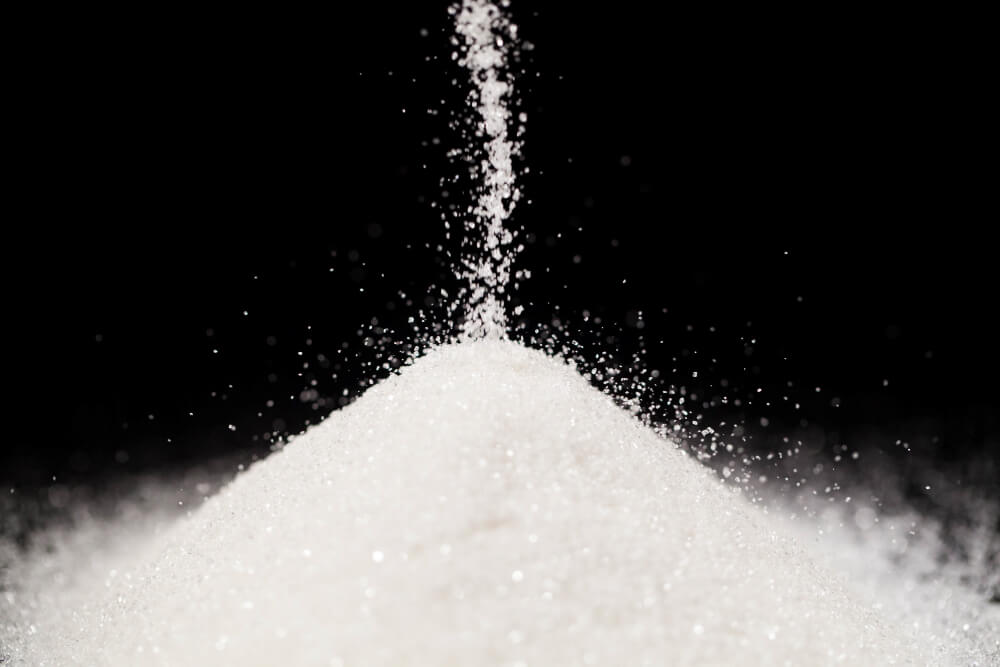
How to Start a Successful Sugar Export from India in 2023!

Among the many food products that have seen an increase in export during recent years, Indian sugar is one such commodity that has significantly seen a global demand. With several new policies and incentives introduced by the government, there is huge potential to make an extremely profitable sugar export from India.

But there is a procedure to be followed which involves obtaining the right information and taking the right steps to initiate your own sugar export from India.

Firstly, let’s try to understand the scope.

Scope of Sugar Export from India

Based on volume, sugar export from India is huge. The domestic sugar market of our nation is the largest producer in the world and acts as a constant growth booster for sugar around the world. Sugar is also a cash crop, or a profit crop, which makes it a well-demanded commodity for import and export. Right from sugarcane to end-result sugar, the Indian sugar economy is regulated and subjected to government overseeing.

The domestic industry is also the second largest industry, coming in right after the cotton textile one. Around 7 percent of our rural population are sugarcane farming families, and many more are employed through secondary activities as well.

Sugar Export from India: Types of Sugar

Here are a few types of sugar that can be exported from India:

  1. White Crystal Sugar
  2. Brown Sugar
  3. Organic Sugar
  4. Round Jaggery
  5. Jaggery Powder
  6. White Powder Sugar
  7. Sucrose AR & LR
  8. Pharmaceutical Sugar
  9. Sugar Cubes
  10. Icing/ Fondant Sugar

Sugar Export from India: the Main Producing States

Here are the major 9 states that produce the most sugar in India. Around 12 percent of the rural population in these states are directly or indirectly employed through the sugar industry.

  • Punjab
  • Uttar Pradesh
  • Maharashtra
  • Andhra Pradesh
  • Bihar
  • Gujarat
  • Haryana
  • Karnataka
  • Tamil Nadu

The top countries that Import sugar from India are China, Russia, UAE, USA, Iraq, Saudi Arabia, and Indonesia.

Procedure to Follow for Sugar Export from India:

  1. HTS Code: Required for export of sugar or sugar confectionery, which comes under processed agricultural products.
  2. FSSAI Registration: The Food Safety and Standards Authority of India is a must for any export of a food product. It provides value to your product by verifying the details such as brand name, commodity name, net quantity, etc.
  3. APEDA Registration: All sugar export products must be registered and verified via APEDA in terms of quantity, value, name, etc.
  4. DGFT Licence: You can get your IEC through the DGTF. This is an online platform on which you must register the quantity of your product. Over here the GST and Tax aspects are also worked upon and it makes the exporting process much simpler.
  5. Export Release Orders: ERO is required by sugar exporters while shipping to other countries for food security.
  6. Letter of Credit: As a confirmation by an overseas buyer, you will require a letter of credit containing the acceptance of your products, payment terms, and more.
  7. Quality Check from Importing Countries: Many nations have their own standard of quality, hence resulting in a quality check from their end according to their set parameters.

Documents You Need for Sugar Export from India:

  • IEC
  • Details of your registered firm or brand
  • ERO (Export Release Order)
  • Export invoice
  • Registration from APEDA
  • Certificate of Origin
  • Letter of Credit
  • PAN & GST details of your products
  • Custom Clearance Certificate
  • Authorization from Importing Country
  • Narcotics Certification
  • Container Type
  • Other details of your company, partners, proprietors, heads, etc.

Conclusion

One of the biggest markets for sugar export from India is Dubai. The market is live and open, and countless Indian sugar brands and products have already made a profitable standing in the same. They have done this by actually going to these markets and bringing their products to the tables of genuine buyers.

You can do the same with the Federation! Having a strong presence in International markets is necessary and you can learn this with Import Export Federation courses and tours. With the help and support of the Federation, you get a chance to pitch your product directly to buyers and close a deal through our Dubai tour and market visit! Register and start your Import Export journey today!

Successful Garment Export from India 2023: How You Can Do It!

India’s textile industry is known to contribute 15% to India’s total export. In recent years many Indian textiles, garments, and the cloth industry as a whole have seen a steady upward graph in global export. Garment export from India doesn’t just comprise clothes, but also many household and kitchen items, with linen and cotton being the most sought-after cloth materials by international markets. Combining that with beautiful, traditional, and elaborate designs and economical prices, Indian garments have the potential to dominate the textile market.

Being the 6th largest exporter of clothes and textiles in the world, there is promising career growth in this export sector. Your product can also be a successful part of this cycle. Do you want to know how? You can learn end-to-end garment export from India from our exclusive online and offline courses, along with tours and port visits!

To start a promising career in the textile industry, you should first be familiar with the recent trends and status of the total garment export from India. Here are some insights to help you get a better perspective of the textile scenario in our nation:

Everything You Need To Know About Garment Export from India!

1. Garment Export From India: Most Exported Textiles!

Although many types of garments and textiles are exported overall from India, here is a list of the most in-demand ones:

  • Traditional and Ethnic Clothes
  • Children’s Clothes
  • Woolen Clothes
  • Cotton and Handwoven Textiles
  • Kitchen linen
  • Home-use textiles
  • Carpets
  • Ready-Made Garments


In the Financial Year of 2021-22, the cotton textile category has seen a significant boom with a 54% yearly growth, along with man-made textiles (51% yearly growth), and ready-made garments (30% yearly growth).

Handicrafts follow behind closely with a 22% yearly growth. Some other popular garments that were sought after were Cotton Yarn, Fabs, Made-ups, etc.

2. Garment Export From India: Top Exporting Countries!

The number one country India exports the most garments to is the USA. With over one-fourth of total Indian export, the USA leads the list followed by countries such as the UAE, the UK, Bangladesh, China, Saudi Arabia, and European Union (Germany, France, Spain, Italy, and the Netherlands).

The export production leading states of India are Andhra Pradesh, Haryana, Telangana, Gujarat, and Jharkhand. The textile export industry is the second largest, only falling behind agriculture, and employs millions of people.

3. Garment Export From India: Textile Export Councils!

  • AEPC (Apparel Export Promotion Council)
  • CEPC (Carpet Export Promotion Council)
  • ISEPC (Indian Silk Export Promotion Council)

4. Garment Export From India: Government Schemes!

There exist many schemes to aid the textile industry export in India. Due to the textile industry being an important part of the Indian growth cogwheel, the need to push production growth and easy trade along with it are imperative. The ATUFS (Amended Technology Upgradation Fund Scheme) and AA (Advance Authorization) schemes and 2 such bodies that solely focus on the goal of increasing garment production.

A few initiatives that have been put up for the same include:

  • PLI (Production Linked Incentive) Scheme
  • PM MITRA (PM Mega Integrated Textile Region and Apparel) Parks
  • TCDS (Textile Cluster Development Scheme)
  • RoSCTL (Rebate of State and Central Taxes and Levies) Scheme

5. Garment Export From India: Documents you Need!

There are a few basic documents you need to start exporting garments in India. Those are:

  • PAN Card
  • Aadhar Card/ Voter ID/ Drivers Licence (Identity Proof)
  • Address Proof
  • IEC (Import Export Code)
  • GST Certificate
  • RCMC

For a full checklist of all documents required for export, read this blog!

6. Garment Export From India: How to Start It?

One of the biggest misconceptions while starting an export is that you won’t be successful without enough capital, products, and experience. This is false. Even with a minimum budget, fewer products, and zero experience you can gain huge profits, especially in the textile industry. A few stages of garment export include manufacturing, Wholesale, Retail, and Boutique, before actual export.

You will also need to register your firm, if you are not sourcing the products, with the EPC (Export Promotion Council). The tricky part is trying to figure out the market trends of the type and nature of garments, and finding reliable and genuine importers for your products. This is included in our newly revised course syllabus!

Conclusion

It was recently decided that the export target for readymade garments for every textile in the year 2022-23 will be 17.6 Billion USD. The AEPC has taken up this challenge, and it plans to work hard to surpass it. In such a case, the opportunity of starting a profitable garment export from India is right in your hands! The textile market is enormous, especially in Dubai. The UAE has two big trading partners for their textile industry- and one of them is India.

Being an open market, with lesser restrictions, there are many importers and buyers looking actively for Indian garments. Some of the most popular textiles in Dubai are printed plain, cotton, synthetic, and polyester garments. You can watch this youtube video of the Dubai Textile market, with an insightful interview with 2 buyers from the Dubai market for more information on how to sell your garments and textile from India.

Being an open market, there is a huge potential in Dubai. But if you don’t put your products on the tables of these buyers, you can lose this opportunity. With the help and support of the Federation, you can learn the A to Z of export of any garments, and build a profitable business out of it. Our Dubai Tour lets you interact with these buyers and strike a deal with them for your products. Register and start your Import Export Journey today!

Career In Import Export: Best 3 Streams

Import export business in India is seeing its golden era. With a National Vision of achieving $1 Trillion in exports, young champs, full-time employees, housewives, and many more are entering the industry. To grow in this industry and make a career in it does not mean exporting goods to international markets. You can explore amazing options for a career in import export.

Adding to the glory, let me give you a gist of India’s export success by showing its merchandise export in January 2022- USD 34.06 Billion! A whopping increase of 23.69% over the numbers of 2021. Source.

The growth indicates amazing opportunities for aspirants who are willing to build a career in import export business. Being the founder of the Import Export Federation, I train many aspirants to start their import export businesses. In my journey of more than 20 years, I have noticed that many aspirants have unique and amazing capabilities of acing particular areas in import export. Addressing this, I would like to dedicate this blog to such aspirants.

Career in Import Export

Top 3 Career in Import Export

1. Sourcing Partner- Career In Import Export Business>

One of the most important phases of export business in India is to source the goods! The percentage of exporters exporting other’s goods is way higher than the percentage of exporters exporting their own produced/manufactured goods.

Career in Import Export

The usual practice of exporting in India includes exporter sourcing directly from good producers or getting it from Sourcing Partners. The role of a sourcing partner is very crucial as it involves connecting potential exporters with manufacturers or dealers or producers of quality goods.

The role involves understanding the requirements of exporters and matching them with the manufacturers or dealers or producers. It requires strong networking skills, deep knowledge of international trades, and a good study of good production practices.

Being a professional exporter and Founder of the Federation, I suggest acing Sourcing in a particular sector and focusing on that sector can offer various benefits to the exporters and help you become a Subject Matter Expert.

2. Marketing Specialist – Career In Import Export Business>

Have good research skills? Jump in! This career in import export opportunity is for you! To export a particular product, having detailed knowledge and study is vital. Knowing what demand the product has in the international market, what countries have the highest demand for that product, what quality is expected, what are the prices in every country, etc. are the most important parameters to freeze the initial level of export business.

Career in Import Export

To start the export, having your homework done is important. And this homework can be bought! By marketing specialist, I mean an expert who has caught the right nerve of export. To become a successful Marketing Specialist, having detailed import export knowledge and practical exposure is recommended. Completing import export courses, attending buyer-seller meetings, participating in business tours, etc. are some excellent opportunities you can grab to make a strong career in import export.

3. Relationship Expert – Career In Import Export Business>

This is an amazing opportunity to build a promising career in the import export sector. One of the biggest pain points of exporters is to connect with international buyers! Especially for those who have never been to any international market, have never interacted with foreign buyers, or have no prior knowledge of building international relationships.

Facilitating exporters with great connections and long-term relationships with International Buyers as well as Export Partners is a rare skill having great demand in the Indian market. To build a strong connection with international buyers, a skilled Relationship Expert can help exporters.

Final Words:

At the Import Export Federation (IEF), my aim is to build an institute that will work as a platform that allows aspiring exporters to learn & start a career in import export with complete hand-holding. I believe that every industry has multiple career opportunities and it is important for a federation like IEF to help people explore all the opportunities. Check out the details of our import export training & practical business tours here.

8 Huge Problems Faced by Exporters in India & How To Tackle Them!

Getting into Import Export is not an easy task. Especially in our country, one can face countless challenges and obstacles on their journey toward a successful export. The problems faced by exporters in India are not small- and are due to multiple reasons. International competition, government restrictions, and lack of knowledge and information are some of the major factors contributing to numerous problems an Indian exporter might face.

Here are the top 8 problems faced by exporters in India. Read on to find smart ways to learn and tackle your way through these problems as well!

Top 8 Problems Faced by Exporters in India & How To Tackle Them!

1. Lack of Relevant Knowledge

Many suppliers and exporters get into this business blind- without enough relevant knowledge and information. Due to this, some of the major problems faced by exporters in India include not knowing how many minute details. When their turn to actually export does come up these exporters can’t clear the processes because of incomplete knowledge.

A relevant course along with adequate study and research can make you more prepared to export.

2. High Competition in Global Markets

For Indian exporters, the competition they face in the global export market can be a big problem they face. There is competition in everything- quality, production cost, price, and sales. Above that, the competition also extends to domestic, local, and existing international exporters.

The consequence of this can be identifying real and genuine importers for your products. Many times these importers are present in Dubai markets and ports, where you can communicate and pitch your product directly.

3. Complicated Documentation

There is a huge checklist of necessary documents you need to export. These documents all have to be prepared in advance. Missing even one of them during your process can hamper your export. Often some small but necessary documents can be forgotten, causing a major problem.

4. Government Restrictions

The ever-changing rules and restrictions by government bodies can be another of the major problems faced by exporters in India. For example, recently the government imposed restrictions on wheat and flour exports. These unprecedented bans along with restrictions that result in licenses, customs, quotas, and other formalities can create even more obstacles for exporters.

5. Subsidies Imposed by First-World Countries

Exporting is an activity that takes place between various countries. Some of these are developed, while others are still developing. This difference causes the imposition of different rules when it comes to customs, export, and licenses. Moreover, many developed countries attach huge subsidies to their exporters, which is disadvantageous to exporters from developing countries. This is directly competitive with Indian exporters.

Problems faced by exporters in India

6. Not Being Well-versed in Negotiations & Languages

Newcomers in the export world can be at a huge risk of being exploited. They can face loss if they don’t know how to accurately study market and product trends and practice negotiation. Language barriers can also be one of the major problems faced by exporters in India specifically. These issues can be solved with the guidance of an expert in the industry.

7. Packaging & Products Standards

Another one of the major problems faced by exporters in India is the demand for high product standards from developed countries. Many Indian products can be subjected to tests from these countries. There is a risk of losing the market in such cases.

Problems faced by exporters in India

8. Other Problems

Here are a few other problems faced by exporters in India:

Conclusion:

There are still a few other problems faced by exporters in India including recessions, lack of incentives, technological differences, and payment difficulties due to the fluctuation of the currency rates of each country. Thus, exporters should be well-versed in various languages, currency rates, market trends, etc., while also being aware of the technicalities of export including documentation, customs, bank procedures, etc. Without this knowledge, information, and training, any exporter can face several obstacles.

You can tackle most, if not all of these problems with the Import Export Federation. An A to Z Import-Export hub, our online & offline courses, along with webinars, JNPT & Dubai tours & visits covers all aspects of export. With experts who have been in the industry for more than a decade, the federation prepares you to overcome any obstacle that comes your way in your export journey! Start your journey today!

Are you considering the dynamic opportunities that come with export from India? India’s diverse market offers many products and services, making it an ideal hub for international trade.

 Embarking on the journey of export from India opens doors to a world of possibilities. With a rich cultural heritage and a rapidly growing economy, Indian goods and services are in high demand across the globe.

 When engaging in export from India, navigating the intricacies of documentation, customs procedures, and compliance with international trade standards is crucial. However, the rewards are well worth the effort.

 Whether you’re a seasoned exporter or a newcomer exploring the potential, understanding the nuances of export from India is essential. Stay informed about the latest trade policies, market trends, and global demands to optimize your export strategy.

 In conclusion, the decision to export from India can be a game-changer for your business. Explore the vast opportunities, stay informed, and make the most of the diverse offerings that the Indian market presents.

Onion Export From India; 7 Best Steps Of Onion Export Procedure

Onion is the oxygen to food! A must-have ingredient in almost all global cuisines! From salads to Pizzas, Lasagnas to Sushi, onion is a common root vegetable. You can imagine the demand for onions in the international market.

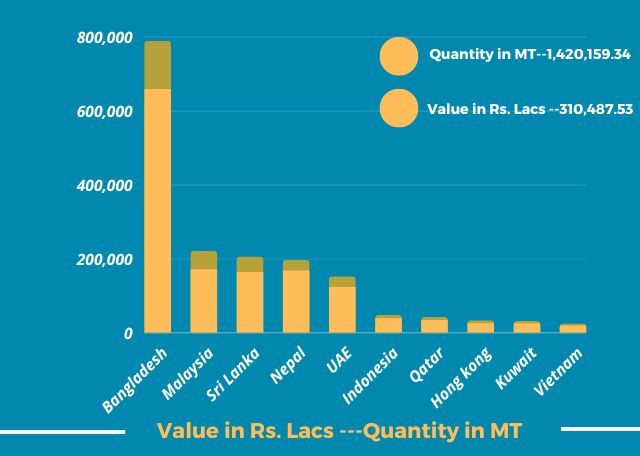
The top global onion-exporting countries are India, China, and Ethiopia. Onion export from India is seeing the best phase. India ranks 1st when it comes to onion export. There are many big-shot developed countries importing different kinds of fruits & vegetables from India and here is a list of countries with promising global onion markets.

Countries where we perform onion export from India:

  • Bangladesh
  • Malaysia
  • Sri Lanka
  • Nepal
  • UAE
  • Indonesia
  • Qatar
  • Hong kong
  • Kuwait
  • Vietnam

India exported 658,721.58 Metric Tons of 130,125.13 Lacs value in the year 2021-22 to Bangladesh.
In the areas of onion cultivation, Maharashtra tops India with a production share of 39% in the year 2020-21 followed by Madhya Pradesh with a production share of 17%. Other states in the race are Karnataka, Gujarat, Andhra Pradesh, Bihar, Rajasthan, Haryana, and Telangana. All these states contribute excellently to the onion export from India.

onion export from India

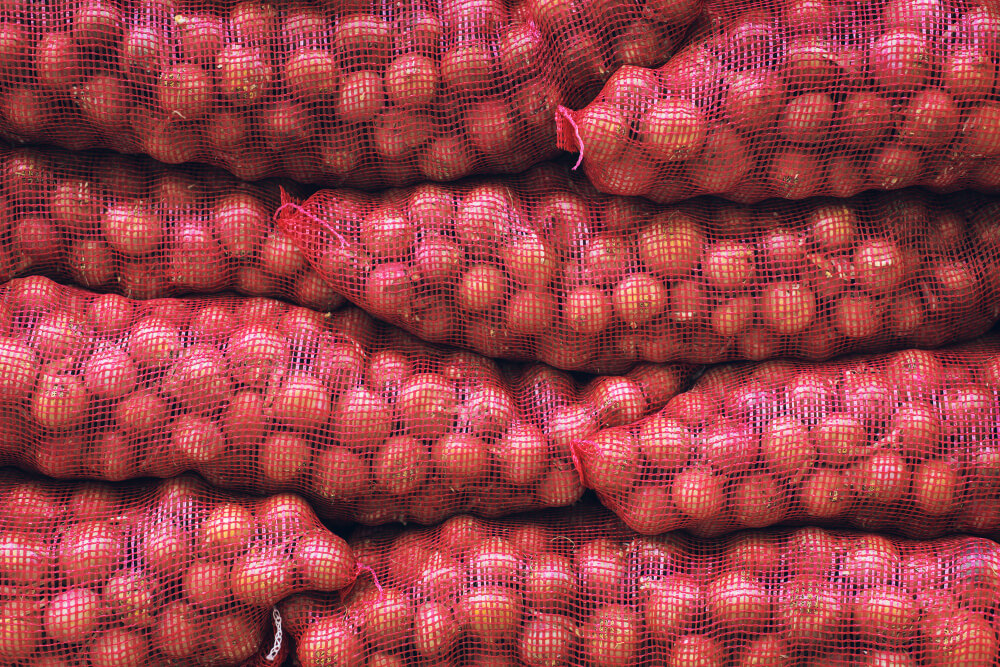
Wonder what types of onions are considered Export-Quality Onions? Export quality onions are Podisu onion, Red Onion, White Onion, Krishnapuram Rose Onion, Bangalore Rose Onion, etc. The usual size of each onion is expected to be from 45mm to 60mm size.

There has been a constant increase in the production of rooted vegetables like onions in the past few years. As per a report generated by Statista, the estimated production of onion in the year 2022 was 32 Million Metric Tons! In 2015, India produced 18.93 Million Metric Tons of onions!

Now that you have understood how promising onion export in India is, let’s jump to the detailed onion export procedure.

Step By Step Onion Export Procedure From India:

1. Import Export Training Is A Must!

The first step would be to learn import export business even if you have the expertise and experience as well. Learning from an elite institution gives you different exposure & helps in excelling in the import-export game.

Especially if you are a beginner, attending a course can give you complete transparency and knowledge of the import-export sector. It helps in decision-making, adds value to the knowledge, and most importantly, gives complete hand-holding in actual export cycles.

2. Do Your Homework!

Understanding the global onion market will help you learn what types of onions are in demand, what countries have maximum demand for onion, how importers work in every country, what are the current prices and what profits to expect, etc.

The Indian Government encourages exporting as it helps in improving the National GDP Rate. Hence, you can literally benefit from various Government facilities & schemes. Different Government bodies also help in getting buyers’ data, ensuring the authenticity of buyers, etc.

3. Find A Reliable Source.

It is extremely important to find a reliable & genuine source that will deliver export-quality onion. Make sure your onion source is offering you-
Excellent quality
Timely delivery
Delivering entire order
Feasible price

4. Register A Company

Once you are ready with your research & finalize your source of quality onion, the first important step you need to take is to establish a registered company. You can be a sole proprietor or you can start in partnership with someone of similar interest, expertise, & experience. With a registered company, you can have a chance to stand out from the competition with proper branding.

5. Find A Partner

Before you start looking for international importers, it is recommended to look for reliable & experienced partners who can support you in finding importers in foreign lands. Having a partner in other import-export hubs can be of great help. Partners help you connect with potential importers, crack deals with them, pitch your products, resolve language barriers, and assist in stable & regular business. Attending trade fairs and export business tours can help you connect with partners.

At the Import Export Federation, we organize Dubai export business tours where we offer practical exposure to actual trade as well as help our exporters connect with reliable partners.

6. How To Get Importers?

How to get trustworthy & reliable importers? Among many other challenges, the most common challenge is finding importers. In this competitive world where many farmers & exporters perform onion export from India, it is important to establish a unique position in the market.

This can be done in 2 ways; offering the best price & offering the best quality. And if you can do both, you win faster! If you are a newbie to onion exporting, make sure you deal in Cash & Carry export where you need not accept any credit period. You can simply ship your containers of onion and get paid for your products right away with any credit period hustle.

7. Documentation

Having all your documents in place is very important. Along with basic documents like your IEC, BL, Bill of Export, Proforma Invoice, Certificate of Origin, PO/EO, Bill of Exchange, etc. make sure you have the insurance document ready with you.

Since onions fall under semi-perishable foods, getting insurance is very important. You can visit the ECGC online platform for more assistance. You can also associate with an Operations Executive to help you through the process.

Along with these 7 steps, having an organization like the Import Export Federation covering your back can get you complete hand-holding & support whenever you need it. Here is a detailed video where one of our students Mr. Vinay shares his experience of shipping 2 large containers of onion in his first
Want to start onion export from India? Contact us today!

Exploring the Rising Onion Export Rate from India: A Boon for the Economy

In recent years, India has witnessed a remarkable surge in its onion export rate, bringing about a host of advantages for the country’s economy. This flourishing onion trade has opened up new opportunities for Indian farmers and traders, contributing significantly to the overall growth of the agricultural sector. With an increasing demand for Indian onions in both domestic and international markets, the country has become a major player in the global onion trade.

The rising onion export rate can be attributed to several factors. First and foremost, India has gained a reputation for producing high-quality onions with exceptional taste and aroma. This has attracted buyers from various parts of the world who appreciate the distinct flavor that Indian onions bring to their dishes. Furthermore, the government’s efforts to streamline export procedures and provide necessary infrastructure support have bolstered the export industry, making it more efficient and cost-effective.

From creating employment opportunities to boosting foreign exchange earnings, the escalating onion export rate holds immense promise for the Indian economy. As the country continues to expand its export footprint, the future looks bright for both onion producers and the nation as a whole.

The importance of onion export for the Indian economy

The onion export industry plays a crucial role in the Indian economy, contributing to its growth and development in various ways. Firstly, onion export generates substantial foreign exchange earnings for the country. As India’s onion production increases, so does its export potential, resulting in higher revenue from international markets. This influx of foreign currency strengthens the country’s economy and enables it to finance various developmental projects.

Secondly, onion export creates employment opportunities, especially for rural communities. As the demand for onions grows, more farmers are motivated to cultivate this crop, leading to increased agricultural activities. This, in turn, generates jobs for farm laborers, packers, and logistics personnel involved in the onion supply chain. The rise in onion export has the potential to alleviate poverty and improve the standard of living for many rural households.

Lastly, onion export enhances the reputation of Indian agriculture globally. With its high-quality onions, India has gained recognition as a reliable supplier in the international market. This not only boosts the country’s image but also opens doors for other Indian agricultural products to gain global acceptance. The success of onion export serves as a testament to the country’s agricultural prowess and sets a benchmark for other Indian commodities.

Start a Successful Fruit Export from India With Top 7 Fruits

When one thinks of India, one thinks of exotic, sweet fruits of high quality. Our nation’s tropical climate and traditional agricultural legacy bring forth fruits that are popular all over the world. Fruit export from India is an evergreen business, given that India is the largest producer of fruits and vegetables in the world after China. This makes fruit export from India a big potential market to venture into.

The export of these sweet commodities is also profitable due to the production cost being comparatively lower than global rates. Combine that with the large variety of fruits produced throughout the seasons and climates, this export can also be year-long if you select fruit from each season!

India’s fresh fruit and vegetable exports came up to Rs. 11,412 crores in the Financial Year 2022. From April to June, the fresh fruits and vegetable export grew by 8.6% and amounted to Rs 5,506 crore. The countries where India exports fruits most include the Netherlands, Bangladesh, the UK, the UAE, Iran, Nepal, Russia, Qatar, Saudi Arabia, and Oman.

Although these categories include both fruits and vegetables, let’s take a look at a few specific fruits that contributed to this price. Here is a list of the most exported fruits from India!

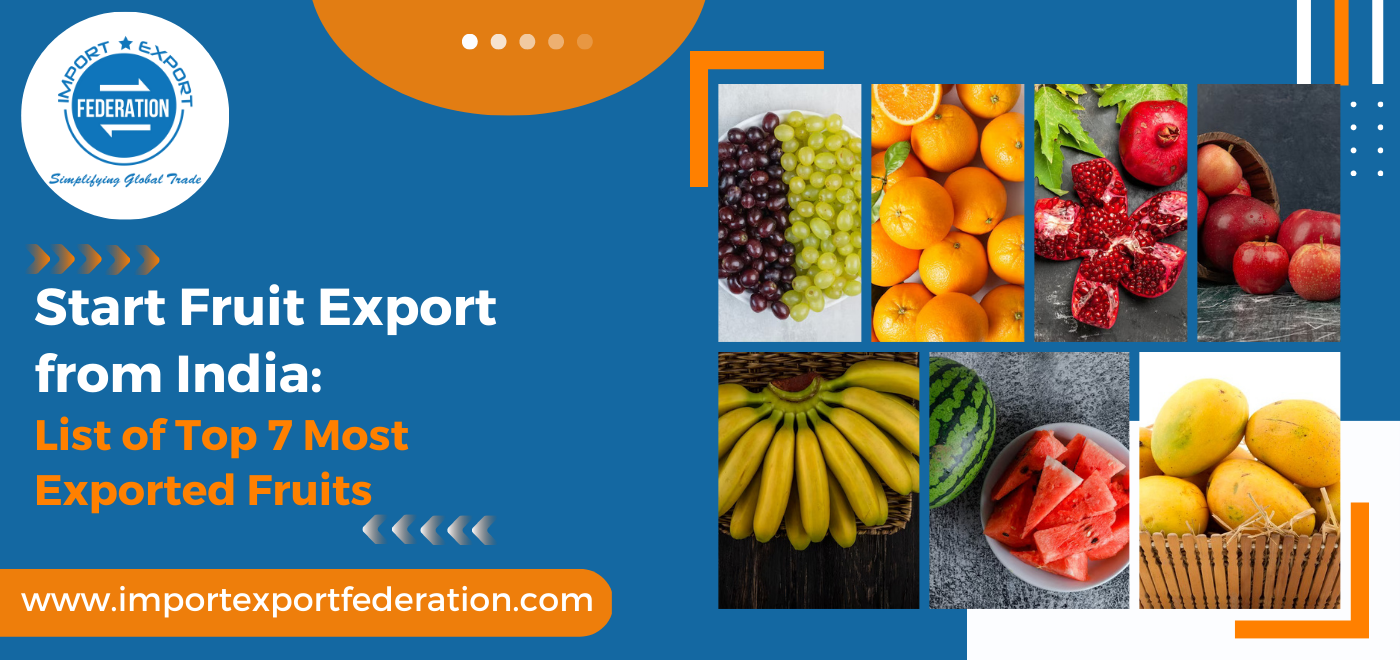
Fruit Export From India: Top 7 Indian Fruits with Global Demand!

1. Fruit Export from India: Pomegranates

Although this list is in no particular chronological order, pomegranates rank high on the list of most exported fruits from India. In fact, our nation makes up more than half of the pomegranates produced in the world. This fruit is mostly exported to Greece, Israel, Russia, the UAE, and Italy. Indian varieties of this fruit include Alandi/ Vadki, Dholka, Kandhari, Kabul, Muskat, Paper Shelled, and Spanish Ruby.

2. Fruit Export from India: Mangoes

One of the biggest defining factors of our country is its sweet and rich mangoes. It’s no surprise that this fruit is one of the most exported fruits from India! The fruit has massive demand, and that’s why it is often imported by big-scale importers through large cargo. Another advantage India possesses is its diverse climate and culture- which produces many varieties of this exotic fruit. Almost all varieties of this fruit have a big global demand. Some popularly exported mango varieties include Alphonso, Kesar, Pairi, Totapuri, Neelum, Langra, Dashehari, Rajapuri, Himsagar, and Chausa.

3. Fruit Export from India: Apples

This crunchy and healthy fruit is popular with its Indian counterpart. Due to being extremely fresh and versatile, some countries that have a huge demand for Indian apples include Singapore, Canada, Malaysia, Vietnam, and Indonesia. Some Indian variants of this fruit include Green Apple, Pink Lady Apple, Fuji Apple, Gala Apple, Honeycrisp Apple, Envy Apple, and Red Apple.

4. Fruit Export from India: Oranges

The high global demand for Oranges comes from their Multipurpose nature. Not only is it used for consumption, but this citrus fruit also comes in handy as a food additive and flavouring, apart from being used in perfumes and cosmetics as well. Some popular Indian orange varieties exported are Nagpur Santra, Coorg Santra, Dancy, Darjeeling Mandarin, and Kinnow Mandarin.

5. Fruit Export from India: Watermelons

India is always present in the top 3 countries that are the biggest producers of watermelon. This juicy and sweet summer fruit is famous for being extremely refreshing. Recent trends show an increase in demand, making this a good time for exporters to venture into watermelon export. Here are Indian varieties of watermelon that are exported: Arka Jyoti, Arka Manik, Durgapura Kesar, Black Diamond Watermelons, Crimson Sweet Watermelons, Sugar Baby Watermelons, Fascination Watermelons, Captivation Watermelons, and Kingman Watermelons.

6. Fruit Export from India: Bananas

Bananas have a huge potential in the export market, with the global demand for them increasing massively. This versatile and healthy fruit is one of the most exported fruits from India. Indian varieties of this fruit include Dwarf Cavendish, Basrai, Robusta, Lal Velchi, Safed Velchi, Rajeli Nendran, Grand Naine, and Poovan.

7. Fruit Export from India: Grapes

Last but not least on this list are grapes. These fruits grow in clusters and come in a variety of colors such as green, purple-pink, and black. Some varieties of this fruit include Thompson Seedless, Perlette, Anab-E-Shahi, Black Hamburg, Pusa Seedless, and Gulabi.

Conclusion

Fruit Export from India is growing day by day, and is not limited to this list! While the fruits in this blog are some of the most exported fruits from India, a few other fruits with a significant global demand include Pineapples, Dragon Fruits, Strawberries, Guavas, Litchis, Papayas, Sapotas (Chikoo), Jackfruits, Pears, Ber, Amla, and Coconuts. With such a large variety, getting into fruit export can be profitable for many exporters! Import Export is a craft that can be learned meticulously.

If you are a budding exporter looking to start your journey, the Import Export Federation definitely has something for you. With our online and offline courses, you can learn the ins & outs of products and carry out global exports with ease!

Check out this blog to discover the most exported Agricultural Products from India!

Banana Export From India. Amazing Facts. How to start?

In his recent tweet, Union Minister Piyush Goyal shared his happiness about the excellent number of ‘banana export from India.’

The tweet states that the banana export from India has jumped 703% from 26 crores to 213 crores in the past 9 years! Though Indian Mangoes are very popular around the world and many mango producers earn whopping amounts in dollars on summer days, Bananas are in the lead!

India is the biggest producer of bananas. As per a report generated by Statista

banana export from India

India is in the leading position in countries producing bananas. India is blessed with excellent weather conditions suitable for quality banana production. Quality Banana plants grow well in tropical regions where the average temperature is 27° C and the rainfall ranges between 78 and 98 inches.

And India has got it all! Andhra Pradesh, Maharashtra, & Gujarat are the top Banana producers in India. In a nutshell, the global banana market loves India’s quality bananas.

Since India tops the countries producing quality bananas, the most exported fruit in India is the Banana. Most global banana buyers prefer India over its competitors like China, the Philippines, & Indonesia as Indian banana exporters present lower costs and a logistical edge.

What Are The Top Banana Import Countries?

Before we jump to the list of banana import countries, have you thought about why bananas are loved so much in other countries? It’s because of the amazing health benefits of bananas. Bananas are rich in nutrients, help in improving blood sugar levels, support digestive health, help in weight loss, and have omega-6 fatty acids keeping a person’s stomach full for a longer time. India exports bananas to around 119 countries around the world.

Here Are The Top 10 Banana Import Countries:

  1. UAE
  2. Iraq
  3. Iran
  4. Oman
  5. Saudi Arabia
  6. USA
  7. Kuwait
  8. Afghanistan
  9. Nepal
  10. Turkey

Did you know that the export value of Indian Bananas for the year 2021 was 7.4 Billion INR? Source. If you wish to enter the most promising sector; banana export from India, you need to study the entire market.

It is important to understand the exact specifications of the bananas, what are the export-quality bananas, how to find the best suppliers for export-quality bananas, where & how to find banana buyers in the global market, how to sell bananas globally without visiting banana import countries, etc. research is important.

Quality expected in the Global Banana Market:

The G9 variety of Cavendish bananas is one of the most demanded types of bananas. This variety is cultivated in Maharashtra, Bihar, Gujarat, and the West Bengal states of India. Another type of banana is Dwarf Cavendish Banana which is again preferred globally. Similar to Cavendish, Grand Naine is another type of banana that is extremely common in India. It is mostly cultivated in Tamil Nadu, Karnataka, Gujarat, Andhra Pradesh, etc.

Other types of bananas export from India:

  • Robusta
  • Dwarf plantain
  • Red banana
  • Alpan (Poovan)
  • Nendran
  • Ney poovan

Mantra To Start Banana Export From India:

I am sure that after going through all the details & interesting facts about banana export from India, you must be curious about the exact procedure to start exporting bananas or exporting any perishable commodities. The question is “how to export bananas from India?”

The first step to start your banana export from India is to learn the Impex sector in & out! Be it shipping a small consignment or an entire container full of bananas, learning import-export is a must!

Learning India’s foreign trade policies, understanding types of containers & their stuffing options, custom clearance procedures, documentation, terms & conditions, learning banking procedures, acing risk management, performing market analysis, packaging overview, company formation, identifying & connecting with international banana buyers, connecting with international partners to assure smooth export operations, etc. is involved in the export cycle. Too overwhelming is it?

I recommend going step-by-step. At the Import Export Federation, we not only offer an import-export course but also make sure that you get a complete 100-day action plan. Check out how our student shipped his first consignment of bananas to gulf countries after the Federation’s course. You will get a complete understanding of how our student decided to export bananas, how he found reliable buyers, how he finalized the costs, etc.

If you wish to learn & start banana export from India with complete hand-holding, learn more about our courses & tours at https://importexportfederation.com/dubai-market-tour-enquiry/

7 Best Agricultural Products Exported from India

Among all the goods shipped from our country, agricultural products exported from India have a substantial demand in the global market. Despite the era of the Covid-19 Pandemic from 2020, India’s agricultural exports grew by 20% during 2021-22, amassing a growth of $50.21 billion.

The nation does not fall back on the agro-exports sector, and various institutes including APEDA (Agriculture and Processed food products export development authority and Commodity boards like Rubber Board, Spicer Board, and Coffee Board are active in promoting the export of agricultural products. Some of the leading countries that import from India are the UAE, Vietnam, the US, Malaysia, Saudi Arabia, Nepal, and Bangladesh among many more. This makes it the perfect time for exporters to invest in agricultural products that can be shipped overseas successfully.

Globally, there are a noteworthy number of agro-products manufacturers in India that are highly sought after. A broad spectrum of commodities falls into this category, including cereal, fruits, and vegetables. In the financial year 2022, the first half saw basmati & non-basmati rice along with spices among the leading agricultural products exported from India.

For context, rice exports earned $9.65 billion, and wheat exports rose from $567 million to $2.2 billion from FY 2021 to FY 2022. Alongside this, the export of dairy products jumped from $323 million to $634 million subsequently. Overall, agricultural products exported from India see a 19.92% growth and reach $50.21 billion.

But what are the top agro-products that have amassed this value through international export? Here is a list of the most exported agricultural products from India, and their breakdown:

List of Highly Demanded Agricultural Products Exported from India

Agricultural Products Exported from India

1. Non-Basmati Rice

More than 1000 varieties of rice exist in the world. Most of those are made in India! The second most exported agricultural product in the financial year 2022 was Non-Basmati rice, which includes any other types of rice except Basmati. Non-Basmati rice worth 456.5 billion Indian rupees was exported from India during 2021-22.

2. Sugar

Since 2013-14, India’s sugar export has grown by a whopping 291%. The financial year 2022 saw sugar being most exported to Indonesia, followed by Bangladesh, Sudan, and the UAE. The market liquidity of sugar mills has improved by Rs 33,000 crore in this year only, with sugar export crossing 10 million tonnes which is why it ranks high on the list of agricultural products exported from India. Sugar exports worth 343.48 billion Indian rupees were carried out during 2021-22. This is one of the most popular agricultural products exported from India.

3. Basmati Rice

All types of rice are extremely in-demand agricultural products worldwide, especially those that come from India. Around two-thirds of Indian, Basmati rice production is exported globally. Some varieties of exported Basmati Rice include Karnal local, Basmati 370, and Basmati 385 among many more. If you lead high-quality rice in the world, you can attain a beneficial price from International Markets. During the financial year 2022, Basmati rice fetched 264.15 billion Indian rupees through export.

4. Castor Oil

Our country is the largest producer of castor oil, which is why it ranks high on the list of agricultural products exported from India.
In the financial year 2021-22, castor oil worth 87.54 billion Indian rupees was exported.

5. Misc. Processed Items

These include processed items such as Dried soups, ice cream, sauces, masalas, powders, soft drink concentrates, mineral water, etc. Misc. processed items worth 86.8 billion Indian rupees were exported from India during 2021-22.

6. Other Cereal

In the world, our nation grows the largest amount of cereal. It’s no secret that there is a huge global demand for cereal, and that’s why this is one of the most popular agricultural products exported from India. This category includes cereals such as Paddy, Sorghum, Millet, Barley, etc. Export worth 343.48 billion Indian rupees was carried out with Indian cereals during 2021-22.

7. Fresh Fruits & Fresh Vegetables

Fresh Fruits and Fresh Vegetables are some of the most exported agricultural products from India. In 2021-22, the total revenue for fresh fruits was 65.61 billion Indian Rupees and 59.8 billion Indian rupees respectively. Fruits like Bananas, Pomegranates, Grapes, Mangoes, Watermelons, Muskmelons, Guavas, and Custard Apples are some famously agricultural products exported from India.

Similarly, vegetables such as Onions, chilies, Green Lemons, Ginger, Drum Sticks, Suran (Elephant foot yam), and Tondli (Ivy Gourd) are popular globally.

Read this blog to get an understanding on how to start a Vegetables & Fruits Export:

Conclusion

Apart from these products, there are still a few agricultural products exported from India that have a significant value and demand in global markets. Several agro, confectionaries and packaged food products are all in high demand in Africa alongside Gulf countries, making Africa a huge potential market for Indian exporters. In a case like this, it becomes important to identify importers who are willing to buy from you.

Most of the importers looking for your agro-products are in the market of Dubai. With IEF’s Dubai Business Tour, you can visit the market and interact with importers first-hand, and get a chance to export your agro-products internationally! Visit our website to enroll and get more details about our courses and tours.